Showing posts with label War Horse. Show all posts

Friday, May 17, 2013

Performer to Watch: Benedict Cumberbatch

Many people are familiar with Benedict Cumberbatch, but this weekend even more people are going to know who he is because of his role in the Star Trek: Into Darkness.  People will also become enamored with his name, because it is honestly one of the most fun names to say over and over again.  Beyond saying his name Cumberbatch has made his mark already, in BBC television, and small art films, but as this year proves he is a star, and major player on the rise.

Most of Cumberbatch's early work is from British television, namely television shows, and mini-series like Fortysomething, Silent Witness, Broken News, The Last Enemy, and National Theatre Live.  Yet it's his work in the show Sherlock on BBC, which has become the show getting him the big roles.  British shows/mini-series have had success in the States before the 2010s, but their adaptations US adaptations like The Office and Being Human, and first run series like Downton, Luther, and Sherlock have never been more popular.  Aside from the US adaptations the PBS broadcast BBC shows like Downton and Sherlock are popular because they transcend the ocean which separates the UK and the States.  Sherlock Holmes is one of the most popular characters in all of literature, and this series helps bring him to life from a different vantage point.

In the BBC version Cumberbatch plays Sherlock more true to form to the literature, heightening his unlike able characteristics, but in a modern day setting   Sherlock and Watson team up against Moriarty of course, but its Cumberbatch's performance which help further the success of this series.  Cumberbatch does a great job with this role, but this was not his first role of note.

Cumberbatch has not only done many British television series but he has done a great deal of British produced films including Atonement, and Tinker Tailor Soldier Spy.  In both films Cumberbatch has this quiet brilliance.    In Atonement his despicable, and makes you hate him only with a few scenes.  In Spy he conveys so much of the emotional character through his face.  Both of these film roles along with Sherlock have proven his strength within the acting world, and now his most recent role in Star Trek will launch him into the world of bigger films.

Cumberbatch is no stranger to being part of of big budget films.  Cumberbatch played Major Jamie Stewart in War Horse and the Necromancer in The Hobbit: An Unexpected Journey. While Horse was mostly focused on, well the horse, and the young boy, and Cumberbatch was hidden while playing the Necromancer, there is no hiding in the role of Khan in Star Trek.  Cumberbatch never chews the scenery; he merely creates the complex, layered villain many have come to loathe, and become intrigued by within the world of Star Trek.  Cumberbatch is brilliant in the role, and he steals the film, people will be talking about him all Summer!

While Cumberbatch is going to be someone talked about all Summer he also going to be on people's minds starring in three major films, which may get a lot of Oscar attention.  August Osage County (John Wells), 12 Years a Slave (Steve McQueen), and The Fifth Estate (Bill Condon).  I am predicting it now, Cumberbatch will receive a Supporting Actor Oscar nomination.  Along with these three major roles, he will be part of the rest of The Hobbit trilogy, and Sherlock third season (probably it's last).  Cumberbatch has so much going for him, and he deserves to be on the rise!

Wednesday, November 21, 2012

Let the Oscar Bait Season Begin with the Life of Pi

Today Ang Lee's released his first critically acclaimed film in seven years, Life of Pi.  Lee has had a wide variety of films in his repertoire, from Sense and Sensibility, to Crouching Tiger Hidden Dragon, and his best film Brokeback Mountain.  While Mountain and Sense and Sensibility were dependent on acting and the screenplay Hidden Dragon was more of a director's feat, and technical masterpiece.  Life of Pi looks to be in the same vein as Hidden Dragon, adding the 3D element.

While Lee is an incredible director, Life of Pi fits into a recent trend for me, as a film lover, films critics and Oscar voters may rubber stamp, but I have no desire to see.  From the first time I saw the preview for Life of Pi, I was a bit underwhelmed, and there was no drive for me to want to see the film.  While I am not providing a convincing argument against wanting to see the film, no am I trying to convince others not to see this film, I feel as though this may be one of those "Oscar pictures" I miss in the theatres because it just does not look to have appealing story.  Life of Pi looks like one of those films that will be visually stunning, but just lacks the depth I need from a screenplay.  While Ang Lee rarely works on films like this, the involvement on James Cameron is not shocking, as his films tend to have some pretty atrocious scripts (Avatar).

My point, is that it's time to whittle down the true achievements in film making vs. the Oscar bait, and while there could be many arguments made for a lot of the films this year, Life of Pi feels the most like "Oscar bait."  Some could argue this about Lincoln, Argo (although less so), and Silver Linings Playbook, but my pick for this year would be Life of Pi, namely because it gives me that feeling when I see the preview.

Last year's big "Oscar bait" films were War Horse and Extremely Loud and Incredibly Close.  I did not see either film in the theatres.  I rented War Horse on red box, and waited Extremely Loud and Incredibly Close to make it to HBO.  While these films are not awful (although Extreme Loud is close) there is something disingenuous about their spirit.

When I sat down to watch War Horse in my apartment, from start to finish the plot felt contrived and forced on the screen.  I saw the play, and fell in love with genuine emotional context of how this horse connected the different people, the story was great and well done in play format.  While Steven Spielberg has made some great films in the 2000s like Munich, Minority Report, and Catch me if you, and this year's Lincoln, this felt like he was film made me feel like they people behind it were just jonesing to get Oscar nominations, and make more money for the play.  I wanted better, but the film did not live up to the play, but still found its way to the best Picture race, because of the fact that the film felt important.

Some of the same things could be said for Extremely Loud and Incredibly Close.  Throughout the past Oscar voters have become obsessed with nominating films centered around the Holocaust.  The Reader, a subpar film, and another example of "Oscar bait" bumped off The Dark Knight from a nomination, because of the subject matter.  The Holocaust represents this dark/interesting moment in history that pulls people in, and helps voters connect.  The event is important, and often times is used to help win Oscars.  When Ricky Gervais hosted the Golden Globes for the first time he joked with Kate Winslet stating I told you if you did a Holocaust film you would win/get nominated (I am paraphrasing).  The sad part is he was correct.

As we get further ahead in time look for films centered around 9/11 to have the same impact on Oscar voters.  9/11 was an important moment in American history, changing the landscape of the United States and the way we view safety.  Extremely Loud and incredibly Close fits within this model, and while the film has some beautiful moments, and is one of the saddest films, there is no cohesion to make this enough of a solid film.  This film bumped out quality films like Drive, and Take Shelter, because the subject matter seemed important, and the bait was cast.

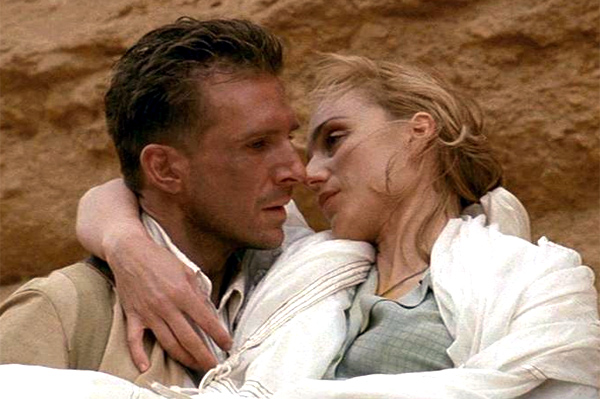
As I posted this a friend had reminded me of The English Patient, back in 1996, which had been released from Miramax, which was owned at that time by the Weinstein Brothers.  The English Patient was meant to feel important, much like The Reader.  Seinfeld, made fun of Patient, with Elaine struggling to sit through the film, while people around went on an on about how great the film was, and namely because people were told it felt important.

The other interesting part about both of these films was the people behind their rise to success were the Weinstein's.  These two men (Harvey and Bob) have behind numerous wins, and nominations that may not have happened with other film companies.  These two men work their magic, and get things to happen, quality be damned!  They are not the only men with power, but they seem to do Oscar campaigning the best, look at Shakespeare in Love beating Saving Private Ryan, or Meryl Streep beating Viola Davis last year.  I admire, and fear the power of these two brothers.  With power comes great responsibility toward the future of film.

Oscar bait can defined in so many different terms, and while this is only one snap shot, there is cause to think about what are the best films, and why are they the best.  How do you define the best?  Am I just being picky?  The answers to both these questions could be, ambiguous.  I want to see Hollywood evolve and not play it safe, to take the risk, and challenge people to see the better films.  The bottom line is that things go back to money, and in the end the best films often do not got seen by the masses.  Here's to hoping that the best films win out this year, and that Oscar bait is kept to a minimum.


Wednesday, April 11, 2012

War Horse Feels as Though it were Made to Win an Oscar not to tell a Moving Story About a Young Boy and his Horse During World War I

War Horse (2 1/2 out 5 Stars)
Directed by Steven Spielberg (Schindler's List, Munich, Catch me if you can)
Written by Richard Curtis (Love Actually) and Lee Hall (Billy Elliot)
Starring: Jeremy Irvine, Emily Watson


War Horse feels as though it were made to win an Oscar not to tell a moving story about a young boy and his horse during World War I.  Steven Spielberg can make magic happen in films, but this film feels as though the "magic" is forced.

The film follows the story of a Horse who is bought at an auction and named Joey by its owner Albert (Irvine). Albert's family is poor and when his father buys Joey he uses the money that is needed to help pay the rent for the land they have.  Albert forms a bond with Joey and together these two work to make sure the land is plowed and form a friendship.  Joey's father decides he must sell the horse to pay to keep their home, and Joey's horse is bought by a soldier going off to fight in World War I.  The horse survives the different elements and becomes intertwined in different stories making an impact on its owners for being strong, determined, and a creature that battles out its underdog status to become a symbol of hope.

This all sounds incredibly moving.  The problem is that inter-spliced between Spielberg's great direction and Janusz Kaminski's utterly stunning cinematography there there is a story that feels disjointed.  Within each different story of this film the connection is this horse, and within each story the horse represents some different emotional context.  The problem with this is that some of the stories work, and some of them fall flat.  I liked watching the bond between Albert and Joey this felt real, but also cliche within the context of the first story.  The best story within the film was when a British and German soldier come together to help cut Joey from barbed wire.  This moment was incredibly poignant, but also felt out place.  The film does not completely register on an emotional level that it should.

While it never registered as a film its interesting that this was one of the most successfully crafted plays on Broadway.  The play won 5 Tony awards including Best Play, and is still running on Broadway because of its incredible success.  The play uses puppets for the horses which is obviously different from the film, but what makes this successful on Broadway and not as a film?  The play hit at something a little bit more genuine while the film forces the emotion onto the audience.

When you adapt material from being something real like a play, the creative teams needs to make up for the different emotional journey the audience will experience.  Plays create in an intense live experience where the audience feels the genuine struggle because the actor presents these emotions vividly in front of them.  

Spielberg 's direction was solid but his films are not evolving.  War Horse feels like a classic film without the great quality.  I wanted to like this film, in fact, I tired to like this film more than I did.  Yet the film feels forced and as if it were trying to force emotional experiences rather than let them happen naturally.

Monday, February 20, 2012

Academy Awards Week: Best Cinematography

One of my favorite parts of a film is the cinematography.  Many people do not know what cinematography is, or how it is one of the most essential parts to a film.  Cinematography is the creation of film images.  The cinematographer will of use a movie camera with film or digital imagery to capture what they want to show the audience.

The American Society of Cinematographers (ASC) define cinematography as "a creative and interpretive process that culminates in the authorship of an original work of art rather than the simple recording of a physical event. Cinematography is not a subcategory of photography. Rather, photography is but one craft that the cinematographer uses in addition to other physical, organizational, managerial, interpretive and image-manipulating techniques to effect one coherent process."


At the advent of film history the cinematographer was the director, but as technology advanced these two roles became different.  The director was no longer the camera operator.  New technologies like color, and wide screen necessitated someone who was a specialist and their sole task was to capture the images and operate the camera.


As film has evolved from the silent era to present day the cinematographers continue to create visually beautiful images for the audiences to see.  During the silent era cinematographers had to work extra hard to make sure that without sound the visual created a cohesive element to the story.  As newer technologies present them self (or return) like 3D cinematographers have to work hard attain an image that captures the genuine emotional experience of the scene.


This year there were several films that did a fantastic job utilizing the brilliance of their cinematographer, here are my personal favorites.


1-The Tree of Life-Emmanual Lubezsi (director of photography)

tree-thumb-500x268-15697\

2-Drive-Newton Thomas Sigel (director of photography)

drive2

3-Hugo-Robert Richardson

Hugo62

4-Shame-Sean Bobbitt

Shame


5-Melancholia-Manuel Alberto Claro


Melancholia


6-The Artist-Guillame Schiffman

CA.1205.top.shots.
7-Harry Potter and the Deathly Hallows Part 2-Eduardo Serra

Image Detail

8-The Girl with the Dragon Tattoo-Jeffrey Cronenwerth

Dragon Tattoo Snowy

9-Tinker Tailor Soldier Spy-Hoyte Van Hoytema

Tinker, Tailor, Soldier, Spy


10-Take Shelter-Adam Stone

takeshelter1

These are just merely the top ten on my list there are many other films like Moneyball, Rise of the Planet of the Apes, Martha Marcy May Marlene, Mission Impossible: Ghost Protocol and many more that could be included amongst this wonderful work.  The cinematographer is one of the hardest working film professionals today.  They have the responsibility to make the film's visual look and feel connect to the emotional aspects of the film.  No, they do not just have to make things look pretty, but in a sense they need to make things look as though each image tells a story.

So who made the cut for the Academy Awards:

The Artist
The Girl with the Dragon Tattoo
Hugo
The Tree of Life 
War Horse 

This is a tough category to predict.  The ASC Guild Award went the the best cinematography of the year, The Tree of Life, but will this line-up at the Academy Awards?  I hope so, but I am not confident.  I think any of these five films could win, but I am pretty sure with little to no passion behind it War Horse is out.  I was a little surprised it made the Best Picture category.  While Dragon Tattoo has some beautiful cinematography it does not have a Best Picture nomination, do the two go hand in hand, not always, but I think the film will go home empty handed.  This leave three films open to three different scenarios come Oscar night.

1) The Artist has a clean sweep.  I do not think it will have a clean sweep, especially since the Academy is catching some flack for rubber stamping this film.  While I do agree the cinematography is one of the best parts of this film because it captures the silence so well, I do not think this film will capture this trophy on Oscar night.

2) Hugo sweeps the technical categories.  Hugo has 11 nominations and a lot of across the board support in the technical categories.  This is a beautiful film, and I would not begrudge the win.  At the moment I am torn between this and The Tree of Life.


3) Justice-The Tree of Life wins because, well it's the best cinematography of the year.  Even those people who did not love, or did not get this film still state the cinematography was amazing.

Will and Should Win: The Tree of Life
Very Close Second: Hugo
Spoiler: The Artist