Showing posts with label Django Unchained. Show all posts

Friday, March 8, 2013

MTV Movie Awards get a Quality Face Lift with Django Unchained and Ted Leading the Nominations


Over the past few years the inclusion of Twilight, it's actors and their many wins seemed to take this award show down negative path.  Last year this award show decided to add "an academy" of their own, and things started to change ever so slightly, but this group of nominees reminds me of the the way the nominees used to look when I was growing up.  The show blended popularity and quality, rather than just letting popularity dictate things.
Both Ted and Django Unchained have 7 nominations a piece including Movie of the Year.  Other Movie of the Year nominees are Silver Linings Playbook (6 nominations-mostly all for J-Law, and Bradley Cooper), The Avengers (4 nominations), and The Dark Knight Rises (4 nominations).  Without Twilight in the mix predicting the winner will be tricky, but with Rebel Wilson as a nominee and host I am going to watch this year!

MOVIE OF THE YEAR
"Django Unchained"
"Silver Linings Playbook"
"Ted"
"The Avengers"
"The Dark Knight Rises"
BEST FEMALE PERFORMANCE
Anne Hathaway, "Les Miserables"
Mila Kunis, "Ted"
Jennifer Lawrence, "Silver Linings Playbook"
Emma Watson, "The Perks of Being a Wallflower"
Rebel Wilson, "Pitch Perfect"
BEST MALE PERFORMANCE
Ben Affleck, "Argo"
Bradley Cooper, "Silver Linings Playbook"
Daniel Day-Lewis, "Lincoln"
Jamie Foxx, "Django Unchained"
Channing Tatum, "Magic Mike"
BREAKTHROUGH PERFORMANCE
Ezra Miller, "The Perks of Being a Wallflower"
Eddie Redmayne, "Les Misérables" 
Suraj Sharma, "Life of Pi" 
Quvenzhané Wallis, "Beasts of the Southern Wild" 
Rebel Wilson, "Pitch Perfect" 
BEST SCARED-AS-S**T PERFORMANCE
Jessica Chastain, "Zero Dark Thirty"
Alexandra Daddario, "Texas Chainsaw 3D"
Martin Freeman, "The Hobbit: An Unexpected Journey"
Jennifer Lawrence, "House at the End of the Street"
Suraj Sharma, "Life of Pi"
BEST ON-SCREEN DUO
Leonardo DiCaprio and Samuel L. Jackson, "Django Unchained" 
Bradley Cooper and Jennifer Lawrence, "Silver Linings Playbook"
Mark Wahlberg and Seth MacFarlane as Ted, "Ted" 
Robert Downey Jr. and Mark Ruffalo, "The Avengers"
Will Ferrell and Zach Galifianakis, "The Campaign" 
BEST SHIRTLESS PERFORMANCE*
Christian Bale, "The Dark Knight Rises 
Daniel Craig, "Skyfall 
Taylor Lautner, "The Twilight Saga: Breaking Dawn – Part 2" 
Seth MacFarlane as Ted, "Ted" 
Channing Tatum, "Magic Mike"
BEST FIGHT
Jamie Foxx vs. Candieland Henchmen, "Django Unchained" 
Daniel Craig vs. Ola Rapace, "Skyfall" 
Mark Wahlberg vs. Seth MacFarlane as Ted, "Ted"
Robert Downey Jr., Chris Evans, Mark Ruffalo, Chris Hemsworth, Scarlett Johansson & Jeremy Renner vs. Tom Hiddleston, "The Avengers" 
Christian Bale vs. Tom Hardy, "The Dark Knight Rises" 
BEST KISS
Kerry Washington and Jamie Foxx, "Django Unchained" 
Kara Hayward and Jared Gilman, "Moonrise Kingdom"
Jennifer Lawrence and Bradley Cooper, "Silver Linings Playbook" 
Mila Kunis and Mark Wahlberg, "Ted" 
Emma Watson and Logan Lerman, "The Perks of Being a Wallflower"
BEST WTF MOMENT
Jamie Foxx and Samuel L. Jackson, Candieland Gets Smoked in "Django Unchained"
Denzel Washington, Final Descent in "Flight" 
Anna Camp, Hack-Appella in "Pitch Perfect" 
Javier Bardem, Oops… There Goes His Face in "Skyfall" 
Seth MacFarlane as Ted, Ted Gets Saucy in "Ted" 
BEST VILLAIN
Javier Bardem, "Skyfall" 
Leonardo DiCaprio, "Django Unchained" 
Marion Cotillard, "The Dark Knight Rises"
Tom Hardy, "The Dark Knight Rises" 
Tom Hiddleston, "The Avengers" 
BEST MUSICAL MOMENT*
Anne Hathaway, "Les Misérables"
Channing Tatum, Matt Bomer, Joe Manganiello, Kevin Nash and Adam Rodriguez, "Magic Mike" 
Anna Kendrick, Rebel Wilson, Anna Camp, Brittany Snow, Alexis Knapp, Ester Dean & Hana Mae Lee, "Pitch Perfect" 
Bradley Cooper and Jennifer Lawrence, "Silver Linings Playbook" 
Emma Watson, Logan Lerman and Ezra Miller, "The Perks of Being a Wallflower"

Friday, February 22, 2013

Academy Award Week (2013) Best Original Screenplay

Typically the Original Screenplay category has a pretty clear, or there has been a lack of competitive scripts which could compete within this category.  This category tends to honor films based on the following categories

The Unique Wins
What are the unique wins?  In my mind these are somewhat anomalies, and while they may make sense  during the year or in hind sight, there is something truly unique about their wins.

2002-Talk to Her (Hable Con Ella)-Foreign films rarely get a win in major categories outside of Best Foreign Language Film in the "major" categories.  Pedro Almodovar had another nomination in Best Director, but the film was not nominated in the Foreign Language film category.  On the other hand you had 10 time nominee Gangs of New York, the popular Nia Vardalos for My Big Fat Greek Wedding, and a multiple nominee Far from Heaven.

2004-Eternal Sunshine of the Spotless Mind-This could be seen as a consolation prize, but this was a two time nominee with only a nomination for this and Kate Winslet.  Sunshine was up against more typical films like The Aviator, Hotel Rwanda, The Incredibles, and even Vera Drake.  Sunshine's win was somewhat expected in the sense that the film was very respected, but the film does not fit the norm.

2008-Milk-This was not a consolation prize, Penn won Actor (although people may not have known this was going to happen), but rarely does a bio-pic on this level win within this category.

Best Picture Sweep 
The Best Picture and Original Screenplay have only lined up 15 times in Oscars history, which does not bode well for the winners in this category, unless you are a massive Oscar favorite in the Best Picture category.

2005-Crash-At the time of the ceremony I saw this win as a consolation prize, but this ended up going along with the sweep.  It was easy to predict this win, but this one of those rare times when it predicted Best Picture.

2009-The Hurt Locker-The Hurt Locker vs. Avatar in Best Picture, on awards night The Hurt Locker won more than was expected, and this was a surprise as well.  My thought and many other people predicted Inglorious Basterds would win this as a consolation prize.

2010-The King's Speech-Like Hurt Locker this was one of those wins that was fierce battle, and it's competition was Inception.  Speech was not qualified for the WGA, but won at the BFCA, and BAFTA.  With few wins Speech needed this the way Argo needs adapted screenplay to help amass more wins.

The Consolation Prize (I Have to Win Somewhere)
Statistically this is where most of the winners fit.  All of the films (except Almost Famous) were nominated for Best Picture, and a few other awards, but this was the only win, which made sense.

2000-Almost Famous was snubbed in the Best Picture category the Miramax machine's Chocolat.  Almost Famous only received four nominations, but was a respected film from from Jerry Maguire nominee Cameron Crowe; he won to give the film some attention.

2001-Gosford Park-Park had lots of stiff competition from Memento, and The Royal Tenenbaums, but Park was the most "Oscar bait" film.  Park made the most sense as a winner, and it was the only Best Picture nominee.

2003-Lost in Translation, 2006-Little Miss Sunshine, 2007-Juno-All three of these films fit within the quirky comedy category.  Translation had the Copola name, and was solid.  Sunshine and Juno had heart mixed with quirk, which could never be taken seriously anywhere else.  While Arkin won for Sunshine that was not expected at all.

2011-Midnight in Paris-Midnight in Paris was another great Woody film, which never had a shot at Best Picture, but was one of the most respected films of the year.

So who wins this year....And the Nominees Are....

Amour-Michael Haneke
Django Unchained-Quentin Tarantino
Flight-John Gatins
Moonrise Kingdom-Wes Anderson, and Roman Coppola
Zero Dark Thirty-Mark Boal

Moonrise Kingdom and Flight, only have one, and two nominations respectively, they are out.  This is one of the tougher races to predict.  Django has won the Golden Globe, BAFTA, and BFCA, which gives it the best odds.  Django has a lot of respect, but why the Academy would honor one of the weakest screenplays is beyond me.  Zero Dark Thirty won the WGA, but Django was ineligible.  The difference between 2009 and this year is that Django has the edge because in 2009 Hurt Locker won all the awards Django won.  Yet can Amour pull off that unique foreign language film win, it has five other nominations. At the moment my winner prediction is Django, but this may change.

Will Win: Django Unchained
Spoilers: Amour then Zero Dark Thirty


Thursday, February 21, 2013

Academy Award Week (2013): Best Supporting Actor....Are you Sure you are in the Right Place?

Throughout the years of Academy Awards performances are placed in acting categories by studios, the options are clearly lead vs. supporting.  Over the years people have bemoaned category fraud, and this year there are two specific cases of that extreme category fraud, Christoph Waltz in Django Unchained, and Phillip Seymour Hoffman in The Master.

Before I look at this year I am going to talk about this category, and category fraud over the years:

2010-Geoffrey Rush in The King's Speech has an equal amount of screen time as lead contender and winner Colin Firth.

2008-Robert Downey Jr. was in most of the scenes in Tropic Thunder, but you could argue the "ensemble rule."  Phillip Seymour Hoffman was a central part in Doubt, and was by no means a supporting player.

2007-Casey Affleck in The Assassination of Jesse James by the Coward Robert Ford was in more of the film than Brad Pitt how he was considered a lead is one of the biggest pieces of category fraud.

2005-Jake Gyllenhaal was a co-lead in Brokeback Mountain, the film was about both Ennis and Jack.

These are just a handful of the different elements of category fraud in the last few years, and while there are still several men who should be considered supporting, the true "supporting" players never seem to win.  One could argue that many of the past few winners Christian Bale in The Fighter, and Javier Bardem in No Country for Old Men could be considered lead performances.

So why does this happen?  Studios want to pack on the number of nominations, would these men have beat out any of the leads to get a nomination? Probably not meaning films would potentially have less or no nominations meaning some films would have less consideration to be viewed.by less people, think The Assassination of Jesse James by the Coward Robert Ford. People often also have this notion that you need more acting nominations to be successful.  Think Brokeback Mountain, but for some reason the critics out there have not had the balls to correct this category placement.

Who are the men guilty of this category fraud crime, why the Weinstein Company's Christoph Waltz from Django Unchained, and Phillip Seymour Hoffman (once again) from The Master.  Both of these performances while not the center of their films are part of the central journey.

Django was obviously a story about Django (Jaime Foxx) and his bounty hunter companion Dr. King Shultz (Christoph Waltz), the two were in the majority of the film. At the earliest part of award season Waltz was placed in the Supporting Actor category.  On November 8th the website goldderby.com reported Waltz would be campaigned in the lead category instead.  After the lead race became crowded the Weinstein Company switched Waltz back to supporting. 

Hoffman was guilty of category fraud for another Weinstein film four years ago, and he is back.  This is a simple case of them wanting to get as many nominations for this smaller film as possible.  Like with Doubt all three central characters are nominated, and ironically both have Amy Adams, and Hoffman.  This is not a case for just the Weinstein's, Warner Brothers, Focus Features, FOX are also guilty of this fraud.  Let's focus on this year's nominees and who may win the top prize.

And the nominees are...
Alan Arkin-Argo
Robert DeNiro-Silver Linings Playbook
Phillip Seymour Hoffman-The Master
Tommy Lee Jones-Lincoln
Christoph Waltz-Django Unchained

This may be one of the tougher races to predict.  Phillip Seymour Hoffman took the early lead winning at the BFCA; he also won many critics groups awards.  Waltz gained momentum with a win at the Golden Globes, and BAFTA.  In the middle of Waltz's wins Tommy Lee Jones won SAG.  I think the power of Harvey Weinstein will guide the winner here, and my prediction all along has been Waltz the lead performance that steals the show.  Many are citing that DeNiro has the heart behind his performance and he has not won in years so he has more on his side, but he has not won a single award prior to this.  Maybe a James Coburn type deal?  Jones sour puss could also take the stage if they decide to throw more at Lincoln, but I think Lincoln seems a bit forgotten.  My gut is to go with the lead in supporting actor clothing.

Will Win: Christoph Waltz
Spoilers: Robert DeNiro, and Tommy Lee Jones


Monday, January 14, 2013

In a Murky Awards Season, Argo, Les Miserables, and Django Unchained with big at the Golden Globes. On the Television side Girls, and Homeland Dominate, while Hosts Tina Fey and Amy Poehler Hilariously Lead the Way

In the larger scheme of award show season the Golden Globes may not matter anymore, and they may just be or have always been a fun party.  In the grand scheme of award show history the Golden Globes always used to be the major pre-Oscar indicator.  Films, screenplays, actors who won here typically won at the Oscars.

In 1995 the Screen Actors Guild (SAG) came onto the scene and added even more intrigue into the award show season.  SAG's members are actors (clearly) whose member could be voting members of the Academy and became a better predictor of the Oscar than the Globes, or validated the nominations, and winners.

Then the critics stepped in stating they wanted a piece of the pie, and started televising the Broadcast Film Critics Awards (BFCA) along with this award show social media helped gain more awareness of winners for the critics group winners.

Suddenly everyone wanted a piece of the pie and the Oscars became a stale leftover.  Last night the Globes proved the award season is has changed.  The three films who won the most trophies at the Globes (in the film world) were Les Miserables with three on the comedy/musical side, while Argo and Django Unchained went home with 2 each toppling the 7 time nominated Lincoln.  Both Argo and Django Unchained are on the lower end of the nomination totals this year.  Argo 7 nominations, missing out on Best Director, and Django Unchained has 5 nominations, also missing out on Best Director.  Les Miserbles has eight Academy award nominations, but not directing nomination as well,.  The day the Academy Award nominations were announced these three films were written off as major contenders, but does their winning change things?  Maybe, but probably not.

On the film side the Globes have proven to be somewhat irrelevant on the Best Picture side.  Looking back on the last few years only a handful of films have won at the Globes (in a Best Picture category),Chicago, Lord of the Rings: Return of the King, Slumdog Millionaire, and The Artist.  If you look at the Oscar statistics, and who has the best shot of winning, its the films that only took home one award, Lincoln, Silver Linings Playbook, and Life of Pi, in that order.  So are the wins irrelevant? Yes and no.  I would never want to take away the joy of someone winning an award for their accomplishment, but this award season has changed.

The Globe ballots for voting members were due before the Oscar nominations came out, Beasts of the Southern Wild and Amour are much bigger players at the Oscars, the Director's Guild Award nominations came out after Oscar ballots were due.  The Oscars being moved up and shifting the entire calendar messed with things more than ever, and they did this in order to reclaim the title as the most prestigious award show, who says whose the best, forget those silly Globes.  The problem is they are going to face a lot of backlash after this year especially with the snub heard round the world of Ben Affleck.

While the Globes may not "matter" they certainly proved something they have their own mind, and they don't care about the Academy.  The Oscars are going to face could lose a lot of people if they and other award shows do not move back to their proper time, and place.  The Oscar remain the most coveted prize in the film world, but Affleck's snub like Christopher Nolan's will sting them.  Argo could still win Best Picture, but it would be the first film to win without a director since 1989's Driving Miss Daisy, and the second ever in Academy history.  This is one of the most fascinating years with Best Picture/Best Director, and only time and the other guilds will tell, on to the actual show.

Hosts Amy Poehler and Tiny Fey were delightful from the great James Cameron zinger to Fey clutching Jennifer Lopez and Poehler casually chatting with Clooney during the Best Actress in a Comedy or Musical announcement.  These two were better than Gervais because they were not only biting in their jokes, but charming, and fit into pieces of the ceremony letting the award show happen.

Beyond the hosts, and the awards a few other highlights were real life folks presenting the Best Film nominee clips. Bill Clinton giving the Presidential seal to Lincoln, and Tony Mendez presenting Argo. Kristin Wiig and Will Ferrell were the best presenters of the night, their SNL schtick of making fun of presenters was great!

The Cecille B. DeMille Award is usually when I doze off a little, but Jodie Foster changed that!Foster gave an electrifying speech, which I just re-watched because I was a bit buzzed while watching; she was heartfelt and more real than any celebrity can be in Hollywood.  Foster does take as much work these days, but this speech proved her greatness.

In regard to the winners, I have my Golden Globe television predictions down to a science only missing one category Lead Actor in a Comedy or Musical, I should have known the Globes would whore it out for the bigger celebrity on the newest show, Don Cheedle in House of Lies.  Girls, Homeland and Game Change dominated this side of the awards, and the Globes picked right here, these were the best of their nominees.

There is not much more to say about the television aspect of the Globes, I will say on the film side Lincoln winning only one of seven is a bit surprising, but who thought Daniel Day-Lewis would lose?  Best Actress is now all about Chastain vs. Lawrence, whoever wins at the Globes will take the lead in the race, but enter Emanuelle Riva.  Riva is a threat, and proves that you can't bank on these other award shows to help you with Oscar betting.  The same can be said about Christoph Waltz winning for Django Unchained.  I switched to Waltz at the last hour, and was right, but he is not nominated at SAG, will that matter?  The award season has changed, but it could be for the better because I have never felt this much anticipation in 4 major categories.  Overall this was a fun night, and one of the best Globes in recent memory.

Here is the full list of winners:

Film
Best Picture: Argo
Best Director: Ben Affleck, Argo
Best Actress: Jessica Chastain, Zero Dark Thirty
Best Actor: Daniel Day-Lewis, Lincoln
Best Picture, Musical/Comedy: Les Miserables
Best Foreign Language Film: Amour, Michael Haneke
Best Actress Comedy: Jennifer Lawrence, Silver Linings Playbook
best Actor Musical: Hugh Jackman, Les Miserables
Best Supporting Actress: Anne Hathaway, Les Miserables
Best Supporting Actor: Christoph Waltz, Django Unchained
Best Screenplay: Quentin Tarantino, Django Unchained
Best Original Score: Mychael Danna, Life of Pi
Best Song: Adele, Skyfall
Best Animated Feature: Brave

Television
Best TV Comedy: Girls
Best TV Drama: Homeland
Best Actress TV Drama: Claire Danes, Homeland
Best Actor TV Drama: Damian Lewis, Homeland
Best Actress TV Comedy: Lena Dunham, Girls
Best Actor TV Comedy: Don Cheadle, House of Lies
Best Actor: Miniseries: Kevin Costner, Hatfields & McCoys
Best Actress Miniseries: Julianne Moore, Game Change
Best Supporting Actress Miniseries: Maggie Smith, Downton Abbey
Supporting Actor Miniseries: Ed Harris, Game Change
Best Miniseries: Game Change


Sunday, January 13, 2013

Golden Globes Predictions: Film

Best Drama Film
Argo 
Django Unchained 
Lincoln
Life of Pi
Zero Dark Thirty

Lincoln is the front runner with the most nominations, and the Globes typically go with the most nominated film in each category, but Argo is a real threat.  To be honest the Globes like to be unpredictable, so this is a tough category to predict.  My gut says Argo, but something says they will crown the eventual Best Pic winner Lincoln.

Will Win: Lincoln
Spoiler: Argo 

Best Drama Actor
Daniel Day-Lewis-Lincoln
Richard Gere-Arbitage
John Hawkes-The Sessions
Joaquin Phoenix-The Master
Denzel Washington-Flight

Day-Lewis is the obvious choice with Denzel as the spoiler, but I am pretty sure no one can take down the President in this race.

Will Win: Daniel Day Lewis-Lincoln
Spoiler-Denzel Washington-Flight

Best Drama Actress
Jessica Chastain-Zero Dark Thirty
Marion Cotillard-Rust and Bone
Helen Mirren-Hitchcock
Naomi Watts-The Impossible
Rachel Weisz-The Deep Blue Sea

Chastain is out front, her role is one of the central things folks are talking about with Zero Dark Thirty, and with good reason.  Yet there is a lot of passion for Watts performance; she has a little more celebrity clout to go with that great performance.  Watts is a serious spoiler.

Will Win: Jessica Chastain-Zero Dark Thirty
Spoiler:Naomi Watts-The Impossible

Best Comedy/Musical Film
The Best Exotic Marigold Hotel
Les Miserables
Moonrise Kingdom
Salmon Fishing in the Yemen
Silver Linings Playbook

This is a tough call, on one hand the Globes love musical, and on the other Silver Linings Playbook is a Weinstein film.  Two very strong possible winners, but even like with 2008 even Sweeney Todd won over Juno.

Will Win: Les Miserables
Very Big Spoiler: Silver Linings Playbook
Should Win-Moonrise Kingdom

Best Actor in a Comedy/Musical
Jack Black-Bernie
Bradley Cooper-Silver Linings Playbook
Hugh Jackman-Les Miserables
Ewen McGregor-Salmon Fishing in Yemen
Bill Murray-Hyde Park on Hudson

Another race between Les Mis, and SLP.  Jackman sings, but Cooper proves he's more than a pretty face with some great acting.  I think Jackman takes this award.

Will Win: Hugh Jackman-Les Miserables
Spoiler: Bradley Cooper-Silver Linings Playbook
Should win Jack Black-Bernie 

Best Actress in a Comedy/Musical
Emily Blunt-Salmon Fishing in Yemen
Judi Dench-The Best Exotic Marigold Hotel
Jennifer Lawrence-Silver Linings Playbook
Maggie Smith-Quartet
Meryl Streep-Hope Springs

There is no way Lawrence will lose this award!

Will and Should Win: Jennifer Lawrence
Spoiler: No One!

Best Supporting Actor
Alan Arkin-Argo
Leonardo DiCaprio-Django Unchained
Phillip Seymour Hoffman-The Master
Tommy Lee Jones-Lincoln
Christoph Waltz-Django Unchained

This race is the biggest toss-up, and while many are predicting DiCaprio, which is possible, and would be ironic because he does not have Oscar nomination, I do not think this will happen.  I think race will come down between Jones and Waltz, and I think Waltz may win this award, but I think the Oscar will go to Tommy Lee Jones.  This will probably be the most exciting Oscar race, and is the most unpredictable tonight.

Will Win: Christoph Waltz-Django Unchained
Spoiler and Should Win: Tommy Lee Jones-Lincoln

Best Supporting Actress
Amy Adams-The Master
Sally Field-Lincoln
Anne Hathaway-Les Miserables
Helen Hunt-The Sessions
Nicole Kidman-The Paperboy

Hathaway is on a runaway train to win her first Oscar, but Sally Field could always be a spoiler, they like her they really like her!

Will and Should Win-Ann Hathaway-Les Miserables
Spoiler-Sally Field-Lincoln

Best Director
Ben Afflec-Argo
Kathryn Bigelow-Zero Dark Thirty
Ang Lee-Life of Pi
Steve Spielberg-Lincoln
Quentin Tarantino-Django Unchained

As weird as this is going to sound, I think Ben Affleck would have won Best Director if he were nominated at the Oscars.  With that said watch out for him and Argo to spoil Spielberg's party here.  I still think the globes will be predictable and go with eventual Oscar winner Steven Spielberg.  I think it would be funny if Bigelow won, because that would mean the BFCA, and Globes broke away from the Oscars.

Will Win: Steven Spielberg-Lincoln
Spoiler: Ben Affleck-Argo
Should Win: Kathryn Bigelow

Best Screenplay-Lincoln (with Django as a spoiler)
Best Animated Feature-Frankenweenie
Best Foreign Language Film-Amour
Best Original Score-Lincoln
Best Original Song-"Skyfall" from Skyfall


Saturday, January 5, 2013

Oscar Roundup 2012: Category Fraud Strikes Again!

Last night I saw the new Tarantino flick, Django Unchained.  Django was obviously a story about Django (Jaime Foxx) and his bounty hunter companion Dr. King Shultz (Christoph Waltz), the two were in the majority of the film.  At the moment Waltz was nominated in Supporting Actor category at the Golden Globes.  At the earliest part of award season Waltz was placed in the Supporting Actor category.  On November 8th the website goldderby.com reported Waltz would be campaigned in the Lead category instead.  After the lead race became crowded the Weinstein Company switched Waltz back to supporting, and if you look at the poster you will see him being campaigned in supporting category.  This Oscar placement, or category fraud has gone on for years on end, but there are a couple of cases this year, which may take things too far.

Over the years the process of category fraud has occurred on many levels, supporting performances competing in the lead category, and lead competing the supporting categories.  Sometimes these have happened when an actor has two great performances in one year.  Most recently Jaime Foxx from Django was part of this form of category fraud.  Foxx had two great performances in 2004 for Ray, and Collateral; he was a lead in both, but nominated in supporting for Collateral.  This happened with Jessica Lange in 1982 as well; she was nominated in the Lead Actress race for Frances, and supporting for Tootsie, her role in Tootsie was the leas role in the film.  Julianne Moore also has two brilliant performances as both similar as repressed housewife in the 50s, in the films Far from Heaven, and The Hours; she was nominated for both, but in supporting for The Hours.  All of these happen, but they are not the most common, nor are they the first instances.

Some of the first instances of category fraud occurred based on age.  Tatum O'Neil won for a lead performance in Paper Moon (1973) at the young age of 10.  One could argue that during the same year Linda Blair was a co-lead in The Exorcist; she was 14.  This trend continued throughout the years Justin Henry in Kramer vs. Kramer in 1979 (8 years old),Abigail Breslin in Little Miss Sunshine (10 years old), Haley Joel Osment in The Sixth Sense (11 years old), Hailee Steinfeld in True Grit (14 years old), Patty Duke in The Miracle Worker (16 years old), Sal Mineo in Rebel Without a Cause (17 years old), Timothy Hutton in Ordinary People (20 years old).  While these are not all of the cases these are a majority of the cases where younger people who were leads in their film were moved to the supporting category because of age.

Over the years this has changed slightly but mainly will change because of the competitive nature of campaigning, and the odds of getting a person a nomination, Keisha Castle Hughes bounced around different categories, but rightfully ended in the Best Actress category for Whale Ride (2002).  Hughes was in supporting at the Screen Actor's Guild, but the Oscars play by their own rules and did not follow the crazy campaigning from the studios.  This happens sometimes, for example Kate Winslet in The Reader, but the Academy often does listen to the FYC (for your consideration) ads, and previous awards.

The major example of award shows (and most likely the Academy) buying this lead player as supporting this year is with Phillip Seymour Hoffman in The Master.  While The Master does focus on the lost soul Freddie Quell (Joaquin Phoenix) the film is also about the journey of Lancaster Dodd (Hoffman).  Hoffman has been a victim of category fraud twice now, the other time was his portrayal of Father Brandon Flynn in Doubt.  Why campaign this great actor (who has won in the Best Actor) in the supporting category twice.  This year the lead category is incredibly crowded, and they want the film to get as many nominations as possible.  The year Doubt was nominated there were also a lot of strong performances, but I suspect if they "worked" hard enough Hoffman could have received a nomination in the lead category.

The big question in the case with Hoffman is why does such a well respected actor get pushed down?  This is not typically the case, most of the time these lead performances in supporting categories are for lesser known or actors trying to get their first nomination: Jake Gyllenhaal in Brokeback Mountain, Jennifer Connelly in A Beautiful Mind, Marcia Gay Harden in Pollock, Casey Affleck in The Assassination of Jesse James by the Coward Robert Ford, and Jennifer Hudson in Dreamgirls are just a few recent examples.

The problem with rampant category fraud is that the Oscars have become more of a game, or political strategy rather than a true test of defining the best in film.  Yet the game is becoming too much, with criticism all over the board from David Cronenberg, Joaquin Phoenix, and past winner Anthony Hopkins, with a win from The Silence of the Lambs.

Hopkins win is also seen as category fraud by many as well, during The Silence of the Lambs. Hopkins was in the film for less than 30 minutes, but won the Oscar for Best Actor, because of his commanding performance.  While most people do not argue about this win, this would still be considered category fraud.  Other instances within this type of situation could be Patricia Neal in Hud, Reese Witherspoon in Walk the Line, Louise Fletcher in One Flew Over the Cuckoo's Nest, David Nivens in Separate Tables, and Nicole Kidman in The Hours.  Together all of these roles have a large impact on the meaning of their film, but largely could be considered supporting players.

If the Oscars continue to remain a game, or about the politics of a film getting more nominations then these instances of category fraud like Waltz and Hoffman will continue to happen.  Both of these men are clear leads, and are both excellent in their films, their work should speak for itself.  When you have clear leads like Casey Affleck getting a nomination in a film where he is the star in the supporting category there is a problem.  Here is to hoping the Oscars work on this problem.

Friday, January 4, 2013

Django is a Bloody Good Time (Literally)

Django Unchained (3 1/2 out of 5 Stars)
Directed and Written by: Quentin Tarantino (Inglorious Basterds, Pulp FictionKill Bill)
Starring: Jaime Foxx, Christoph Waltz, Leonardo DiCaprio, and Samuel L. Jackson


There is a lot of peripheral talk about this film from Spike Lee's Vibe interview about the insensitivity to his ancestors to the question of violence in cinema.  Spike Lee (who refuses to see the film) stated via twitter "slavery was not a Sergio Leone Spaghetti Western.  It was a Holocaust.

While Tarantino pays homage to the Spaghetti Western the central story of Django revolves two key concepts within this genre, the revenge story, and the cowboy buddy concept.  Dr. King Schultz (Waltz) in his horse drawn wagon with a tooth hanging from the top is in search for Django a slave from a plantation.  When Dr. King Schultz finds Django (Foxx) the two embark on a journey as bounty hunters to kill the three men who captured him and his wife Broomhilda (Kerry Washington) and sold them to other plantations in order to separate them.  While on their journey the duo begin to connect and threw German folklore they begin a journey as bounty hunters on a journey to save Broomhilda from Calvin Candie and his plantation Candyland in Mississippi.

While artists have their right to their opinion, I would respect Lee's thoughts on this journey if he had seen the film.  Lee and Tarantino both have used racial constructs in their films, in different ways, but they have been important to some of the construct of their films (Lee way more).  Avoiding seeing this film reminds me of the way in which the late Ernest Borgnine refused to see Brokeback Mountain, because he thought it defiled the legend of the cowboy flick.  While I can see and understand some of the racial problematic moments within the film.  Like Brokeback Django is more than the message on the outside, and I would be more curious to dialogue or speak with Lee  after he saw the film.

Let's move beyond Lee's problems, and talk about the actual film.  Django is a bloody good time, but also one that over stayed its welcome, by thirty minutes.  Tarantino's script is bold, mesmerizing, and often hilarious.  While not one of the best screenplays of the year this film crosses barriers in only ways that Tarantino, a master craftsmen, can manipulate.  There is something brave about Tarantino's direction, and writing.  Within his last two films (Django, and Basterds) there is a fuck history mentality.  Tarantino is constructing films which blend aspects of history within this film with the Spaghetti Western where a black man becomes a bounty hunter killing white men.  In both Basterds and Django the victims become the victimizers in a way pushes film to the next level.  Mix all of this creativity with of a soundtrack that includes a combination of music from Tupac, Johnny Cash, and Ennio Morricone-you can't help but get pulled into the story and the characters.

While Jamie Foxx is the star, and the center of all the action, the most talented cast member within this film, is Academy Award winner Christoph Waltz.  Waltz won his Academy Award playing a Nazi in Tarantino's last film Inglorious Basterds, a role which helped garner a lot of attention.  Waltz steals the show, once again, but not as the dastardly villain, rather as the man helping Django on his journey to get his wife back.  Foxx and Waltz, dance this dance almost as though it were a perfect Waltz.  The embody one of the key elements within this Spaghetti Western.  Their work as this sheriff and deputy like bounty hunters may provide more blood than I have seen in a long time.

This leads to another one of the other peripheral topics the film raises in regard to violence.  With recent incidents in Colorado, and Connecticut there is a question being posed, and now directly to Tarantino does the incredible amount of violence need to happen?  Artistically this has been one of his signature style choices.  Tarantino without violence is like Ben without Jerry, lost.  Does he cross the line too much?  There is an eternal blood bath within the film, but the goal of the film is vengeance and within a film that not only offends on many levels.  Tarantino uses the N-word more than I have even heard on film and almost becomes just as common as saying "hello."  As much as Tarantino offends he also challenges by showing the racism within the fascination the mammy and mandigo.  Going back to the violence, while he may push the line, that's the goal of the film.

Along with pushing boundaries Django and the good doctor are tying to get to Broomhilda, and the only way to do this is through Calvin Candie, and his ever faithful house slave Stephen (Jackson), well them and the many men who oversee the fields.  DiCaprio's Francophile Candie is one bad dude, and DiCaprio is one great scene stealer.  Yet Jackson's Uncle Tom like character is the person who steals the scenes most while in Candyland; he plays the darkest character in the film, and his abhorrence to those who do not help his master are what sets him off more than anything.

These two evil men, help Tarantino juxtapose the "heroes." and provide an interesting, and harsh reality on the evil within slavery.  Tarantino along with Cinematographer Robert Richardson create a visually sumptuous story that once you are strapped in, you do not want to hit eject, until the last thirty minutes. The film loses a little steam as the blood bath rises at the end of the film.  While the film is by no means perfect, and there are reasons people may struggle with the way things are portrayed this is still one solid film that challenges the film landscape, you would expect nothing less from Tarantino.  

Wednesday, January 2, 2013

Art Director's Guild help set the Stage for the Newly Best Production Design Oscar Category

Today the Art Director's Guild announced their awards, and while there were no surprises, except no Moonrise Kingdom these Guild Awards help show which smaller films have more support.  In the film categories they also break down the nominees by genre: period, fantasy, and contemporary film.

The actual Oscar nominees usually fall between the Period and Fantasy film categories.  I think this year's Oscar nominees will be all of the period films (minus Argo) and The Hobbit: An Unexpected Journey.  Cloud Atlas and Life of Pi have a strong shot to knock out Django, but I think Django's recent release gives the film a leg up on the competition.

I have to add that the television nominations are also incredible, and they nominated two of my favorite shows, Newsroom, and Community. Bravo!

NOMINEES FOR EXCELLENCE IN PRODUCTION DESIGN FOR A FEATURE FILM IN 2012:
Period Film
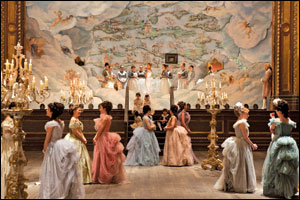
ANNA KARENINA
Production Designer:  Sarah Greenwood
ARGO
Production Designer:  Sharon Seymour
DJANGO UNCHAINED
Production Designer:  J. Michael Riva
LES MISÉRABLES 
Production Designer:  Eve Stewart
LINCOLN 
Production Designer:  Rick Carter
Fantasy Film
CLOUD ATLAS  
Production Designer:  Uli Hanisch, Hugh Bateup
LIFE OF PI 
Production Designer:  David Gropman
PROMETHEUS 
Production Designer:  Arthur Max
THE DARK KNIGHT RISES 
Production Designers:  Nathan Crowley, Kevin Kavanaugh
THE HOBBIT: AN UNEXPECTED JOURNEY 
Production Designer:  Dan Hannah
Contemporary Film
FLIGHT  
Production Designer:  Nelson Coates
SKYFALL 
Production Designer:  Dennis Gassner
THE BEST EXOTIC MARIGOLD HOTEL
Production Designer:  Alan MacDonald
THE IMPOSSIBLE 
Production Designer:  Eugenio Caballero
ZERO DARK THIRTY 
Production Designer:  Jeremy Hindle
===
NOMINEES FOR EXCELLENCE IN PRODUCTION DESIGN IN TELEVISION FOR 2012:
One-Hour Single Camera Television Series
BOARDWALK EMPIRE Episode:  Resolution
Production Designer:Bill Groom
DOWNTON ABBEY Episode:  Christmas Special
Production Designer: Donal Woods
GAME OF THRONES Episode:  The Ghost of Harrenhal
Production Designer: Gemma Jackson
HOMELAND Episode:  The Choice
Production Designer: John D. Kretschmer
NEWSROOM Episode:  We Just Decided To
Production Designer:Richard Hoover
Television Movie or Miniseries
AMERICAN HORROR STORY: ASYLUM Episode: I Am Anne Frank, Part 2
Production Designer:  Mark Worthington
GAME CHANGE
Production Designer:  Michael Corenblith
HATFIELDS and MCCOYS
Episode:  Ep.#1.1-Night One, Ep.#1.2-Night Two, Ep.#1.3-Night Three
Production Designer:  Derek R. Hill
HEMINGWAY & GELLHORN
Production Designer:  Geoffrey Kirkland
MOCKINGBIRD LANE
Production Designer:  Michael Wylie
Episode of a Half Hour Single-Camera Television Series
COMMUNITY Episode:  Pillows and Blankets
Production Designer:  Denise Pizzini
GIRLS Episode:  Pilot
Production Designer:  Judy Becker
MODERN FAMILY Episode:  Mystery Date
Production Designer:  Richard Berg
PARKS & RECREATION Episode:  Soda Tax
Production Designer:  Ian Phillips
THE NEW NORMAL Episode:  Sofa’s Choice
Production Designer:  Tony Fanning
Episode of a Multicamera, Variety, or Unscripted Series
2 BROKE GIRLS Episode:  And The Silent Partner
Production Designer:  Glenda Rovello
DEMOCRATIC NATIONAL CONVENTION            
Production Designer:  Bruce Rodgers
HOW I MET YOUR MOTHER Episode:  The Magicians Code Part 1
Production Designer:  Stephan Olson
SATURDAY NIGHT LIVE Episode:  Mick Jagger Host
Production Designer:  Keith Raywood
THE VOICE
Production Designer:  Anton Goss, James Pearse Connelly


Are Movies too Long, and Should Intermissions be Brought Back?

After seeing Les Miserables I realized something, some movies are just too long, and you need a break.  The  stage version of Les Miserables is 2 hours and 50 minutes, with a 15 minute intermission. The film versions is 2 hours and 36 minutes, no intermission, but there are almost 20 minutes of commercials and previews prior to the film.  While there have been longer films Titanic, and Avatar, without the intermission, the big question on my mind at the moment is should films have an intermissions again?

Throughout the early history of film there have been numerous movies, which had intermissions to break up the length and emotional impact of the film.  The most notable films with intermissions were:


  • The Birth of a Nation (1915)
  • Gone with the Wind (1939)
  • Fantasia (1940)
  • Ben-Hur (1959)
  • Spartacus (1960)
  • Lawrence of Arabia (1962)
  • It's a Mad, Mad, Mad, Mad World (1963)
  • Doctor Zhivago (1965)
  • 2001: A Space Odyssey (1968)
  • Monty Python And The Holy Grail (1974)

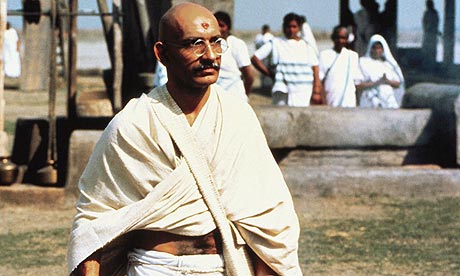
The last film to have an intermission was Gandhi (1982), 30 years ago.  There are obviously several reasons the intermission disappeared.  The first the growing Hollywood business multiplex model.  Throughout the early years many movie theatres were single theatre, and now there are up to 18 different theatres in one movie complex.  Now that movies have elongated things even more by adding more commercials has made the time spent in those seats even longer.  Can theatres afford to lose time to show more movies?  No.

One of the other major reasons is the advancement in technology, theatres use different projects today, which would make an intermission impossible.  New digital technology does not use the reels.  Without the reel switch people would have to build this into their film, which could be a bit jarring to film experience.

So the intermission is gone forever, or so it appears.  Both the business model, and newer technology make this old tradition a thing of the past.  In looking at, and researching more about this tradition Peter Hartlaub of the San Francisco Chronicle wrote a great article entitled "Movie theatre intermissions: Gone but not forgotten." The article cites a battle almost between the theatre and film studios, he stated that in talking with theatre owners they would love to bring back the intermission because "they make their money in concessions" and intermissions would lead to more snack buying.  Hartlaub also stated that the multiplexes have contracts with film companies saying that the intermission is gone so they have more showings, and so they can make more money.

Hartlaub's perspective on the growing length of films is a valid point of view.  Within the last month there have been at least three major studio films longer than 2 hour an minute average, The Hobbit: An Uxepected Journey (2 hours and 49 minutes), Django Unchained (2 hours and 48 minutes, and Les Miserables (2 hours and 36 minutes).  Audiences still show up, each films box office gross on a domestic, and foreign level has performed incredibly well.  There have been greater rumblings with movie goers about the length of films more and more. Les Miserables has received the biggest complaints most recently. Does length matter, or does this complaint come with the quality of the film?

The answer may be both.  I think fans would appreciate the time to re-fill their popcorn buckets, stretch their legs, go to the bathroom, and not miss any of the movie.  As a regular audience member I hate leaving my seat in the middle of the film.  I want to enjoy every moment without having to feel I have to run in and out of the theatre, or sneak past people's legs. I also think fans are apt to get more antsy when the enjoy the film less.  Within the stage version of Les Miserable I remember the emotional impact at the end of Act 1 keeping me on the edge of my seat and ready finish their journey with the characters in Act 2.  The film version of Les Miserables could have benefited from (it could have benefited by being better as well).

I think I can say with great certainty that Gandhi will remain the last film to have an intermission.  Film studios are not going to change their mind about this noble theatrical tradition.  I myself am not old enough to have ever seen a movie with this intermission, but I think re-visiting this would be interesting. As I go to see Django this weekend I will test the quality theory even further, ask other friends their own thoughts, and challenge film studios to think more about the film goer, and their own movie experience.