Saturday, January 5, 2013

National Society of Film Critics (NSFC) Name Amour Best Picture

The National Society of Film Critics (NSFC) was founded in 1966, when Holis Alpert was refused entrance to the New York Film Critics Circle.  Alpert founded founded this critics with Pauline Kael, and every year they have picked their own awards.  The group was founded from critics outside of the mainstream, and has awarded some of the best and most under rated films, and performances over the years.

Over the past 46 years, the show has picked some great winners Z, Blue Velvet, Being John Malkovich, and Pan's Labyrinth (to name a few).  How does this critics group impact Oscar, or does it?  Of the winners, 18 of them have been nominated for Best Picture, 4 have won Best Picture, Annie Hall (1977), Unforgiven (1992), Schindler's List (1993), and most recently The Hurt Locker (2009).  Over the years winning this award seems like more of an honor for films, and performances the Academy may not take as seriously because of their lack of mainstream attention.  This is a group that will honor a foreign language film with their Best Picture award, proof with this year's Best Picture winner.

Here is a full list of the winners, and runner-ups with their voting breakdown:


BEST PICTURE
1. Amour – 28
2. The Master – 25
3. Zero Dark Thirty – 18
BEST DIRECTOR
1. Michael Haneke-Amour– 27
2. Kathryn Bigelow – 24
2. Paul Thomas Anderson – 24
BEST ACTOR
1. Daniel Day-Lewis – Lincoln – 59
2. Denis Lavant – Holy Motors-49
2. Joaquin Phoenix – The Master-49
BEST ACTRESS
1. Emmanuelle Riva – Amour – 50
2. Jennifer Lawrence - Silver Linings Playbook- 42
3. Jessica Chastain–Zero Dark Thirty- 32
BEST SUPPORTING ACTOR
1.  Matthew McConaughey – Magic Mike, Bernie– 27
2. Tommy Lee Jones –Lincoln- 22
3. Philip Seymour Hoffman –The Master 19
BEST SUPPORTING ACTRESS
1. Amy Adams – The Master – 34
2. Sally Field –Lincoln- 23
3. Anne Hathaway – Les Miserables-13
BEST NONFICTION
1. The Gatekeepers – 53
2. This Is Not a Film – 45
3. Searching for Sugar Man – 23
BEST SCREENPLAY
1. Lincoln  – Tony Kushner – 59
2. The Master (P.T. Anderson)– 27
3.  Silver Linings Playbook (David O. Russell) – 19
BEST CINEMATOGRAPHY
1. Master (Mihai Malaimare, Jr. ) – 60
2. Skyfall (Roger Deakins) – 30
3. Zero Dark Thirty (Greig Fraser) – 21
Many of these folks will be nominated for Academy Awards, along with some of the films.  In a longer season I would say that these wins would have a larger impact on Oscar nominees, but since ballots were due yesterday, Amour is in the same position.  If the season were longer I think Amour would have become a Best Picture nomination, but the film's director Michael Haneke could be a spoiler in the fifth spot.
The Master also received a lot of attention today, both this and Amour have received some of the best critical reactions of the year.  Paul Thomas Anderson's film could snag a few nominations, both acting, screenplay, and cinematography, but this has lost steam throughout the award season.
Lincoln is looking like more and more of a sure thing, that will win Best Picture, it has made money, the critics enjoy it, and it has an incredible director, and performers within the film.  

Friday, January 4, 2013

Django is a Bloody Good Time (Literally)

Django Unchained (3 1/2 out of 5 Stars)
Directed and Written by: Quentin Tarantino (Inglorious Basterds, Pulp FictionKill Bill)
Starring: Jaime Foxx, Christoph Waltz, Leonardo DiCaprio, and Samuel L. Jackson


There is a lot of peripheral talk about this film from Spike Lee's Vibe interview about the insensitivity to his ancestors to the question of violence in cinema.  Spike Lee (who refuses to see the film) stated via twitter "slavery was not a Sergio Leone Spaghetti Western.  It was a Holocaust.

While Tarantino pays homage to the Spaghetti Western the central story of Django revolves two key concepts within this genre, the revenge story, and the cowboy buddy concept.  Dr. King Schultz (Waltz) in his horse drawn wagon with a tooth hanging from the top is in search for Django a slave from a plantation.  When Dr. King Schultz finds Django (Foxx) the two embark on a journey as bounty hunters to kill the three men who captured him and his wife Broomhilda (Kerry Washington) and sold them to other plantations in order to separate them.  While on their journey the duo begin to connect and threw German folklore they begin a journey as bounty hunters on a journey to save Broomhilda from Calvin Candie and his plantation Candyland in Mississippi.

While artists have their right to their opinion, I would respect Lee's thoughts on this journey if he had seen the film.  Lee and Tarantino both have used racial constructs in their films, in different ways, but they have been important to some of the construct of their films (Lee way more).  Avoiding seeing this film reminds me of the way in which the late Ernest Borgnine refused to see Brokeback Mountain, because he thought it defiled the legend of the cowboy flick.  While I can see and understand some of the racial problematic moments within the film.  Like Brokeback Django is more than the message on the outside, and I would be more curious to dialogue or speak with Lee  after he saw the film.

Let's move beyond Lee's problems, and talk about the actual film.  Django is a bloody good time, but also one that over stayed its welcome, by thirty minutes.  Tarantino's script is bold, mesmerizing, and often hilarious.  While not one of the best screenplays of the year this film crosses barriers in only ways that Tarantino, a master craftsmen, can manipulate.  There is something brave about Tarantino's direction, and writing.  Within his last two films (Django, and Basterds) there is a fuck history mentality.  Tarantino is constructing films which blend aspects of history within this film with the Spaghetti Western where a black man becomes a bounty hunter killing white men.  In both Basterds and Django the victims become the victimizers in a way pushes film to the next level.  Mix all of this creativity with of a soundtrack that includes a combination of music from Tupac, Johnny Cash, and Ennio Morricone-you can't help but get pulled into the story and the characters.

While Jamie Foxx is the star, and the center of all the action, the most talented cast member within this film, is Academy Award winner Christoph Waltz.  Waltz won his Academy Award playing a Nazi in Tarantino's last film Inglorious Basterds, a role which helped garner a lot of attention.  Waltz steals the show, once again, but not as the dastardly villain, rather as the man helping Django on his journey to get his wife back.  Foxx and Waltz, dance this dance almost as though it were a perfect Waltz.  The embody one of the key elements within this Spaghetti Western.  Their work as this sheriff and deputy like bounty hunters may provide more blood than I have seen in a long time.

This leads to another one of the other peripheral topics the film raises in regard to violence.  With recent incidents in Colorado, and Connecticut there is a question being posed, and now directly to Tarantino does the incredible amount of violence need to happen?  Artistically this has been one of his signature style choices.  Tarantino without violence is like Ben without Jerry, lost.  Does he cross the line too much?  There is an eternal blood bath within the film, but the goal of the film is vengeance and within a film that not only offends on many levels.  Tarantino uses the N-word more than I have even heard on film and almost becomes just as common as saying "hello."  As much as Tarantino offends he also challenges by showing the racism within the fascination the mammy and mandigo.  Going back to the violence, while he may push the line, that's the goal of the film.

Along with pushing boundaries Django and the good doctor are tying to get to Broomhilda, and the only way to do this is through Calvin Candie, and his ever faithful house slave Stephen (Jackson), well them and the many men who oversee the fields.  DiCaprio's Francophile Candie is one bad dude, and DiCaprio is one great scene stealer.  Yet Jackson's Uncle Tom like character is the person who steals the scenes most while in Candyland; he plays the darkest character in the film, and his abhorrence to those who do not help his master are what sets him off more than anything.

These two evil men, help Tarantino juxtapose the "heroes." and provide an interesting, and harsh reality on the evil within slavery.  Tarantino along with Cinematographer Robert Richardson create a visually sumptuous story that once you are strapped in, you do not want to hit eject, until the last thirty minutes. The film loses a little steam as the blood bath rises at the end of the film.  While the film is by no means perfect, and there are reasons people may struggle with the way things are portrayed this is still one solid film that challenges the film landscape, you would expect nothing less from Tarantino.  

The Writer's Guild gets Predictable with Ineligibility


This year's nominees for the Writer's Guild of America (WGA) were a bit predictable, especially after they ruled many films ineligible. I also say this because for the first time in a long time I predicted all of the nominees. 
The two best nominees of the bunch for me are nominations for Looper, and The Perks of Being a Wallflower, two of the best screenplays this year.  Listed below are the nominees, but who could and will unseat the winners?  Statistically speaking 2 films are always replaced.
Original Screenplay:
"Flight," Written by John Gatins; Paramount Pictures
"Looper," Written by Rian Johnson; TriStar Pictures
"The Master," Written by Paul Thomas Anderson; The Weinstein Company
"Moonrise Kingdom," Written by Wes Anderson & Roman Coppola; Focus Features
"Zero Dark Thirty," Written by Mark Boal; Columbia Pictures
Look for Looper and Flight to be the most vulnerable at the Oscars, Django Unchained and Amour are major contenders in this category.  These two latter films also have better shots at Best Picture nominations.
Adapted Screenplay:
"Argo," Screenplay by Chris Terrio; Based on a selection from "The Master of Disguise" by Antonio J. Mendez and the Wired Magazine article "The Great Escape" by Joshuah Bearman; Warner Bros. Pictures
"Life of Pi," Screenplay by David Magee; Based on the novel by Yann Martel; 20th Century Fox
"Lincoln," Screenplay by Tony Kushner; Based in part on the book "Team of Rivals: The Political Genius of Abraham Lincoln" by Doris Kearns Goodwin; DreamWorks Pictures
"The Perks of Being a Wallflower," Screenplay by Stephen Chbosky; Based on his book; Summit Entertainment
"Silver Linings Playbook," Screenplay by David O. Russell; Based on the novel by Matthew Quick; The Weinstein Company
While the same statistic holds true with Adapted Screenplay, this could actually be the five.  Although have some suspicion Beasts of the Southern Wild will replace Perks.  
Documentary Screenplay:
"The Central Park Five," Written by Sarah Burns and David McMahon and Ken Burns; Sundance Selects
"The Invisible War," Written by Kirby Dick; Cinedigm Entertainment Group
"Mea Maxima Culpa:" Silence in the House of God, Written by Alex Gibney; HBO Documentary Films
"Searching for Sugar Man," Written by Malik Bendejelloul; Sony Pictures Classics
"We Are Legion: The Story of the Hacktivists," Written by Brian Knappenberger; Cinetic Media
"West of Memphis," Written by Amy Berg & Billy McMillin; Sony Pictures Classics

Wednesday, January 2, 2013

Art Director's Guild help set the Stage for the Newly Best Production Design Oscar Category

Today the Art Director's Guild announced their awards, and while there were no surprises, except no Moonrise Kingdom these Guild Awards help show which smaller films have more support.  In the film categories they also break down the nominees by genre: period, fantasy, and contemporary film.

The actual Oscar nominees usually fall between the Period and Fantasy film categories.  I think this year's Oscar nominees will be all of the period films (minus Argo) and The Hobbit: An Unexpected Journey.  Cloud Atlas and Life of Pi have a strong shot to knock out Django, but I think Django's recent release gives the film a leg up on the competition.

I have to add that the television nominations are also incredible, and they nominated two of my favorite shows, Newsroom, and Community. Bravo!

NOMINEES FOR EXCELLENCE IN PRODUCTION DESIGN FOR A FEATURE FILM IN 2012:
Period Film
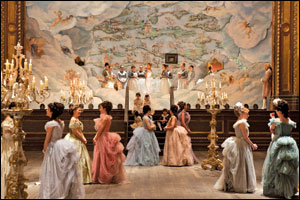
ANNA KARENINA
Production Designer:  Sarah Greenwood
ARGO
Production Designer:  Sharon Seymour
DJANGO UNCHAINED
Production Designer:  J. Michael Riva
LES MISÉRABLES 
Production Designer:  Eve Stewart
LINCOLN 
Production Designer:  Rick Carter
Fantasy Film
CLOUD ATLAS  
Production Designer:  Uli Hanisch, Hugh Bateup
LIFE OF PI 
Production Designer:  David Gropman
PROMETHEUS 
Production Designer:  Arthur Max
THE DARK KNIGHT RISES 
Production Designers:  Nathan Crowley, Kevin Kavanaugh
THE HOBBIT: AN UNEXPECTED JOURNEY 
Production Designer:  Dan Hannah
Contemporary Film
FLIGHT  
Production Designer:  Nelson Coates
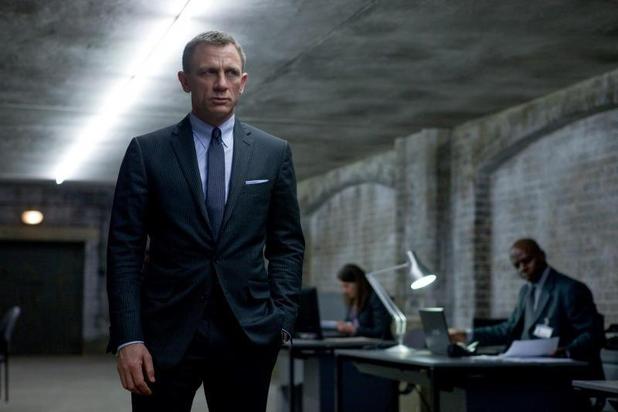
SKYFALL 
Production Designer:  Dennis Gassner
THE BEST EXOTIC MARIGOLD HOTEL
Production Designer:  Alan MacDonald
THE IMPOSSIBLE 
Production Designer:  Eugenio Caballero
ZERO DARK THIRTY 
Production Designer:  Jeremy Hindle
===
NOMINEES FOR EXCELLENCE IN PRODUCTION DESIGN IN TELEVISION FOR 2012:
One-Hour Single Camera Television Series
BOARDWALK EMPIRE Episode:  Resolution
Production Designer:Bill Groom
DOWNTON ABBEY Episode:  Christmas Special
Production Designer: Donal Woods
GAME OF THRONES Episode:  The Ghost of Harrenhal
Production Designer: Gemma Jackson
HOMELAND Episode:  The Choice
Production Designer: John D. Kretschmer
NEWSROOM Episode:  We Just Decided To
Production Designer:Richard Hoover
Television Movie or Miniseries
AMERICAN HORROR STORY: ASYLUM Episode: I Am Anne Frank, Part 2
Production Designer:  Mark Worthington
GAME CHANGE
Production Designer:  Michael Corenblith
HATFIELDS and MCCOYS
Episode:  Ep.#1.1-Night One, Ep.#1.2-Night Two, Ep.#1.3-Night Three
Production Designer:  Derek R. Hill
HEMINGWAY & GELLHORN
Production Designer:  Geoffrey Kirkland
MOCKINGBIRD LANE
Production Designer:  Michael Wylie
Episode of a Half Hour Single-Camera Television Series
COMMUNITY Episode:  Pillows and Blankets
Production Designer:  Denise Pizzini
GIRLS Episode:  Pilot
Production Designer:  Judy Becker
MODERN FAMILY Episode:  Mystery Date
Production Designer:  Richard Berg
PARKS & RECREATION Episode:  Soda Tax
Production Designer:  Ian Phillips
THE NEW NORMAL Episode:  Sofa’s Choice
Production Designer:  Tony Fanning
Episode of a Multicamera, Variety, or Unscripted Series
2 BROKE GIRLS Episode:  And The Silent Partner
Production Designer:  Glenda Rovello
DEMOCRATIC NATIONAL CONVENTION            
Production Designer:  Bruce Rodgers
HOW I MET YOUR MOTHER Episode:  The Magicians Code Part 1
Production Designer:  Stephan Olson
SATURDAY NIGHT LIVE Episode:  Mick Jagger Host
Production Designer:  Keith Raywood
THE VOICE
Production Designer:  Anton Goss, James Pearse Connelly


The PGA name their 10 Nominees with a Moderate Surprise, Skyfall


The List is out, and the Producer's Guild has spoken!  Overall the list is pretty predictable, the most "surprising" is Skyfall.  With my own predictions I thought this branch would surprise and go for The Best Exotic Marigold Hotel, they went for altenate 11th pick Skyfall.  I went 9 for 10 on this award.  Skyfall should have been a more obvious choice from this branch, namely because of the box office power and quality.  Skyfall just passed the billion dollar mark globally, and is still going.  
Of the the films nominated Skyfall is the most vulnerable, this branch rarely matches perfectly so look for one of these to fall of the list come Oscar time.  Skyfall is unfortunatley the obvious choice for that fate (based on statistics).  The film is a sure fire threat in other areas (don't underestimate Javier Bardem, and technical nominations/wins).
The Award for Outstanding Producer of a Theatrical Motion Picture
“Argo” (Warner Bros.)Producers: Ben Affleck, George Clooney, Grant Heslov
“Beasts of the Southern Wild” (Fox Searchlight Pictures)Producers: Michael Gottwald, Dan Janvey, Josh Penn
“Django Unchained” (The Weinstein Company)Producers: Reginald Hudlin, Pilar Savone, Stacey Sher
“Les Misérables” (Universal Pictures)Producers: Tim Bevan & Eric Fellner, Debra Hayward, Cameron Mackintosh
Life of Pi” (Fox 2000 Pictures)Producers: Ang Lee, Gil Netter, David Womark
“Lincoln” (Touchstone Pictures)Producers:  Kathleen Kennedy, Steven Spielberg
“Moonrise Kingdom” (Focus Features)Producers: Wes Anderson & Scott Rudin, Jeremy Dawson, Steven Rales
“Silver Linings Playbook” (The Weinstein Company)Producers: Bruce Cohen, Donna Gigliotti, Jonathan Gordon
“Skyfall” (Columbia Pictures)Producers: Barbara Broccoli, Michael G. Wilson
“Zero Dark Thirty” (Columbia Pictures)Producers: Kathryn Bigelow, Mark Boal, Megan Ellison
The Award for Outstanding Producer of Animated Theatrical Motion Pictures:
“Brave” (Walt Disney Studios Motion Pictures)
Producer: Katherine Sarafian
“Frankenweenie” (Walt Disney Pictures)
Producers: Allison Abbate, Tim Burton
“ParaNorman” (Focus Features)
Producers: Travis Knight, Arianne Sutner
“Rise of the Guardians” (Paramount Pictures)
Producers: Nancy Bernstein, Christina Steinberg
“Wreck-It Ralph” (Walt Disney Studios Motion Pictures)
Producer: Clark Spencer
The Television Nominees
The David L. Wolper Award for Outstanding Producer of Long-Form Television:
“American Horror Story” (FX)
Producers: Brad Buecker, Dante Di Loreto, Brad Falchuk, Ryan Murphy, Chip Vucelich, Alexis Martin Woodall
“The Dust Bowl” (PBS)
Producers: Producer Eligibility Pending
“Game Change” (HBO)
Producers: Gary Goetzman, Tom Hanks, Jay Roach, Amy Sayres, Steven Shareshian, Danny Strong
“Hatfields & McCoys” (History)
Producers: Barry Berg, Kevin Costner, Darrell Fetty, Leslie Greif, Herb Nanas
“Sherlock” (PBS)
Producers: Mark Gatiss, Steven Moffat, Beryl Vertue, Sue Vertue
In November 2012, the Producers Guild of America announced the Documentary Theatrical Motion Picture, Television Series and Non-Fiction Television Nominations; the following list includes complete producer credits.
The Award for Outstanding Producer of Documentary Theatrical Motion Pictures:
“A People Uncounted” (Urbinder Films)
Producers: Marc Swenker, Aaron Yeger
“The Gatekeepers” (Sony Pictures Classics)
Producers: Estelle Fialon, Philippa Kowarsky, Dror Moreh
“The Island President” (Samuel Goldwyn Films)
Producers: Richard Berg, Bonni Cohen
“The Other Dream Team” (The Film Arcade)
Producers: Marius Markevicius, Jon Weinbach
“Searching For Sugar Man” (Sony Pictures Classics)
Producers: Malik Bendjelloul, Simon Chinn
The Norman Felton Award for Outstanding Producer of Episodic Television, Drama:
“Breaking Bad” (AMC)
Producers: Melissa Bernstein, Sam Catlin, Bryan Cranston, Vince Gilligan, Peter Gould, Mark Johnson, Stewart Lyons, Michelle MacLaren, George Mastras, Diane Mercer, Thomas Schnauz, Moira Walley-Beckett
“Downton Abbey” (PBS)
Producers: Julian Fellowes, Gareth Neame, Liz Trubridge
“Game of Thrones” (HBO)
Producers: David Benioff, Bernadette Caulfield, Frank Doelger, Carolyn Strauss, D.B. Weiss
“Homeland” (Showtime)
Producers: Henry Bromell, Alexander Cary, Michael Cuesta, Alex Gansa, Howard Gordon, Chip Johannessen, Michael Klick, Meredith Stiehm
“Mad Men” (AMC)
Producers: Jon Hamm, Scott Hornbacher, Andre Jacquemetton, Maria Jacquemetton, Victor Levin, Blake McCormick, Matthew Weiner
The Danny Thomas Award for Outstanding Producer of Episodic Television, Comedy:
“30 Rock” (NBC)
Producers: Irene Burns, Kay Cannon, Robert Carlock, Vali Chandrasekaran, Luke Del Tredici, Tina Fey, Matt Hubbard, Marci Klein, Jerry Kupfer, Lorne Michaels, David Miner, Dylan Morgan, Jeff Richmond, John Riggi, Josh Siegal, Ron Weiner
“The Big Bang Theory” (CBS)
Producers: Chuck Lorre, Steve Molaro, Faye Oshima Belyeu, Bill Prady
“Curb Your Enthusiasm” (HBO)
Producers: Alec Berg, Larry Charles, Larry David, Jeff Garlin, Tim Gibbons, David Mandel, Erin O’Malley, Jeff Schaffer, Laura Streicher
“Louie” (FX)
Producers: Dave Becky, M. Blair Breard, Louis C.K.
“Modern Family” (ABC)
Producers: Cindy Chupack, Paul Corrigan, Abraham Higginbotham, Ben Karlin, Steven Levitan, Christopher Lloyd, Jeff Morton, Dan O’Shannon, Jeffrey Richman, Chris Smirnoff, Brad Walsh, Bill 
Wrubel, Danny ZukerThe Award for Outstanding Producer of Non-Fiction Television:
“American Masters” (PBS)
Producers: Prudence Glass, Susan Lacy, Julie Sacks
“Anthony Bourdain: No Reservations” (Travel Channel)
Producers: Anthony Bourdain, Christopher Collins, Lydia Tenaglia, Sandy Zweig
“Deadliest Catch” (Discovery Channel)
Producers: Thom Beers, Jeff Conroy, Sean Dash, John Gray, Sheila McCormack, Bill Pruitt, Decker Watson
“Inside the Actors Studio” (Bravo)
Producers: James Lipton, Shawn Tesser, Jeff Wurtz
“Shark Tank” (ABC)
Producers: Rhett Bachner, Becky Blitz, Mark Burnett, Bill Gaudsmith, Yun Lingner, Brien Meagher, Clay Newbill, Jim Roush, Laura Skowlund, Paul Sutera, Patrick Wood
The Award for Outstanding Producer of Live Entertainment & Talk Television:
“The Colbert Report” (Comedy Central)
Producers: Meredith Bennett, Stephen Colbert, Richard Dahm, Paul Dinello, Barry Julien, Matt Lappin, Emily Lazar, Tanya Michnevich Bracco, Tom Purcell, Jon Stewart
“Jimmy Kimmel Live” (ABC)
Producers: David Craig, Ken Crosby, Doug DeLuca, Erin Irwin, Jimmy Kimmel, Jill Leiderman, Jason Schrift, Jennifer Sharron
“Late Night with Jimmy Fallon” (NBC)
Producers: Hillary Hunn, Lorne Michaels, Gavin Purcell, Michael Shoemaker
“Real Time with Bill Maher” (HBO)
Producers: Scott Carter, Sheila Griffiths, Marc Gurvitz, Dean Johnsen, Bill Maher, Billy Martin
“Saturday Night Live” (NBC)
Producers: Ken Aymong, Steve Higgins, Erik Kenward, Lorne Michaels, John Mulaney
The Award for Outstanding Producer of Competition Television:
“The Amazing Race” (CBS)
Producers: Jerry Bruckheimer, Elise Doganieri, Jonathan Littman, Bertram van Munster, Mark Vertullo
“Dancing with the Stars” (ABC)
Producers: Ashley Edens Shaffer, Conrad Green, Joe Sungkur
“Project Runway” (Lifetime)
Producers: Jane Cha Cutler, Desiree Gruber, Tim Gunn, Heidi Klum, Jonathan Murray, Sara Rea, Colleen Sands
“Top Chef” (Bravo)
Producers: Daniel Cutforth, Casey Kriley, Jane Lipsitz, Dan Murphy, Nan Strait
“The Voice” (NBC)
Producers: Stijn Bakkers, Mark Burnett, John De Mol, Chad Hines, Lee Metzger, Audrey Morrissey, Jim Roush, Nicolle Yaron, Mike Yurchuk, Amanda Zucker

Are Movies too Long, and Should Intermissions be Brought Back?

After seeing Les Miserables I realized something, some movies are just too long, and you need a break.  The  stage version of Les Miserables is 2 hours and 50 minutes, with a 15 minute intermission. The film versions is 2 hours and 36 minutes, no intermission, but there are almost 20 minutes of commercials and previews prior to the film.  While there have been longer films Titanic, and Avatar, without the intermission, the big question on my mind at the moment is should films have an intermissions again?

Throughout the early history of film there have been numerous movies, which had intermissions to break up the length and emotional impact of the film.  The most notable films with intermissions were:


  • The Birth of a Nation (1915)
  • Gone with the Wind (1939)
  • Fantasia (1940)
  • Ben-Hur (1959)
  • Spartacus (1960)
  • Lawrence of Arabia (1962)
  • It's a Mad, Mad, Mad, Mad World (1963)
  • Doctor Zhivago (1965)
  • 2001: A Space Odyssey (1968)
  • Monty Python And The Holy Grail (1974)

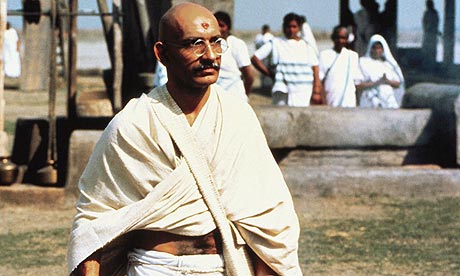
The last film to have an intermission was Gandhi (1982), 30 years ago.  There are obviously several reasons the intermission disappeared.  The first the growing Hollywood business multiplex model.  Throughout the early years many movie theatres were single theatre, and now there are up to 18 different theatres in one movie complex.  Now that movies have elongated things even more by adding more commercials has made the time spent in those seats even longer.  Can theatres afford to lose time to show more movies?  No.

One of the other major reasons is the advancement in technology, theatres use different projects today, which would make an intermission impossible.  New digital technology does not use the reels.  Without the reel switch people would have to build this into their film, which could be a bit jarring to film experience.

So the intermission is gone forever, or so it appears.  Both the business model, and newer technology make this old tradition a thing of the past.  In looking at, and researching more about this tradition Peter Hartlaub of the San Francisco Chronicle wrote a great article entitled "Movie theatre intermissions: Gone but not forgotten." The article cites a battle almost between the theatre and film studios, he stated that in talking with theatre owners they would love to bring back the intermission because "they make their money in concessions" and intermissions would lead to more snack buying.  Hartlaub also stated that the multiplexes have contracts with film companies saying that the intermission is gone so they have more showings, and so they can make more money.

Hartlaub's perspective on the growing length of films is a valid point of view.  Within the last month there have been at least three major studio films longer than 2 hour an minute average, The Hobbit: An Uxepected Journey (2 hours and 49 minutes), Django Unchained (2 hours and 48 minutes, and Les Miserables (2 hours and 36 minutes).  Audiences still show up, each films box office gross on a domestic, and foreign level has performed incredibly well.  There have been greater rumblings with movie goers about the length of films more and more. Les Miserables has received the biggest complaints most recently. Does length matter, or does this complaint come with the quality of the film?

The answer may be both.  I think fans would appreciate the time to re-fill their popcorn buckets, stretch their legs, go to the bathroom, and not miss any of the movie.  As a regular audience member I hate leaving my seat in the middle of the film.  I want to enjoy every moment without having to feel I have to run in and out of the theatre, or sneak past people's legs. I also think fans are apt to get more antsy when the enjoy the film less.  Within the stage version of Les Miserable I remember the emotional impact at the end of Act 1 keeping me on the edge of my seat and ready finish their journey with the characters in Act 2.  The film version of Les Miserables could have benefited from (it could have benefited by being better as well).

I think I can say with great certainty that Gandhi will remain the last film to have an intermission.  Film studios are not going to change their mind about this noble theatrical tradition.  I myself am not old enough to have ever seen a movie with this intermission, but I think re-visiting this would be interesting. As I go to see Django this weekend I will test the quality theory even further, ask other friends their own thoughts, and challenge film studios to think more about the film goer, and their own movie experience.