Showing posts with label Gone with the Wind. Show all posts

Tuesday, February 19, 2013

Academy Award Week (2013): Costume Design, Telling a Story

Over the years at the Academy Awards one of my favorite and most under appreciated categories is Costume Design.  The costumes tell a story, and help make some of the best visual representation on screen.

If you think about the many years of film there are numerous iconic costumes, which have become unforgettable. All the way back to 1939 you have Scarlet O'Hara's numerous dresses including her curtain dress, to Dorothy's plaid dress to costuming people in a galaxy far far away in Star Wars, all the way to Miranda Priestly's many outfits and jackets she threw on Andrea's desk.  Film costumes throughout time have evolved fitting the need of their film, and defined a viewer's experience.

Scott Feinberg at The Hollywood Reporter (THR) put together a great piece talking with their fashion consultant at THR about this year's costumes.  One of my favorite comments that was made was that films that do not fit within the fantasy or period piece realm are often not recognized at the Academy Awards.  A couple examples which were cited even citing some period film which were ignored this year were Moonrise Kingdom, Argo, and Skyfall.  Skyfall is the perfect example, look at those fantastic suits, and the dresses of the Bond girls.  These films told a story through the clothes on the screen, and while many take them for granted they are one of the most important elements of a film.

If you look at past years think of films like Devil Wears Prada, and their great costumes.  Prada was competing against the power house period costumes from Marie Antoinette. Period films from much older eras, and fantasy films often dominate these categories.  If you look at the last 10 years of Costume Design nominees 98 percent of the nominees fit within this category.  Even looking at this year the fantastic costumes the nominees completely within this trend.  The major question is will the Academy break from this and realize the role in which non-traditional costume design plays within a film, or will they keep up with the same pattern?


Anna Karenina-Jaqueline Durran
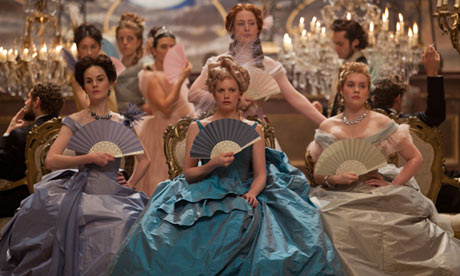

Les Miserables-Paco Delgado


Lincoln-Joanna Johnston

Mirror Mirror-Eika Ishioka

Snow White and the Huntsman-Colleen Atwood

Of all the nominees the favorite is Anna Karenina, Jacquline Durran's works is flawless and based on the pictures above as a representation of of the costumes as characters it is the easy favorite to win this trophy.   Durran should have won this award for her work in Atonement, but was beat by another period film Elizabeth: The Golden Age. If any film were to challenge Karenina I would like that to be Mirrror Mirror, the costumes elevated this film beyond any level.  Eika Ishioka passed away before Mirror Mirror was even released and she did not get to see see her fantastic work hit the screen.  Colleen Atwood is the veteran in this category; she has nine nominations and three wins, and while her work is solid she will not be making it up to the podium this year.

Will Win: Anna Karenina
Spoiler: Mirror Mirror

Sunday, July 15, 2012

A Tribute to Great Films: The Philadelphia Story (1940)


In a time when comedy is cheap and laughs come at the expense of the audience few films resemble the classic romantic comedy, The Philadelphia Story.  The film, directed by George Cukor (My Fair Lady, Adam’s Rib, A Star is Born, and Born Yesterday) follows socialite Tracy Lord (Katherine Hepburn) whose wedding plans are complicated by her husband C.K. Dexter Haven (Cary Grant) involving himself and tabloid writer Macaulay Connor (Jimmy Stewart) and tabloid photographer Elizabeth Imbrie (Ruth Hussey).  The combination of these plot elements make for one of the funniest/sweetest films of all time.  The film was nominated for 6 Academy Award including Best Picture and Best Director.

The plot of this film centers around gossip within high society, and the way it impacts people being themselves.  In this film (based on the play) Tracy’s father has taken up with a dancer in New York City, and has walked away from the family for the time being.  As the wedding draws near he finally returns, but Tracy hopes to keep her families name out of the tabloids, and move forward with class and dignity, even though she herself had a messy divorce.

The film has a modern sensibility, and proves that throughout time motifs are transient.  I have not seen 1956 film, High Society, that retools this story, but I doubt the film can measure up (I am hesitatingly adding it to my watch list). The film The Women (1939), was directed by the same director, and was given a more modern retelling in 2008 with the likes of Meg Ryan, Debra Messing, Jada Pinkett-Smith and audiences did not turn out in droves.  Films are often remade because modern day audiences say things like “I don’t like old movies” or “Why should I watch a movie about something I can’t relate to, or that’s black and white?”  When I hear people say this about film, or specifically old movies I refer them to this film, and many of the other Hepburn comedies.  The spirit of this film shines with an eternal brightness, thanks in large part to the direction of the wonderful George Cukor. 

Cukor has had two distinguished monographs placed upon him.  During his time he was known as a “woman’s director.”  Cukor directed many great performances from Katherine Hepburn in films like this one, and Adam’s Rib; he also directed Audrey Hepburn in My Fair Lady (the performance gained no Oscar nomination), Judy Garland in a Star is Born, the film The Women, and greats like Greta Garbo.  This is only a brief list of the women he worked with, but this man knew how to get the best out of these talented women.  Cukor abhorred this label, and was more proud of another accomplishment. Cukor is the director who has had the most actors go on to win in Lead Actor category: Jimmy Stewart-The Philadelphia Story, Ronald Coleman-A Double Life, and Rex Harrison-My Fair Lady.

Cukor’s career is one of the most fascinating careers, mainly because he had a role in the future direction of the classic films The Wizard of Oz and Gone with the Wind, but is not credited as directing either film.  Cukor never shot a single scene for Oz, but he did make a few creative changes that would be instrumental to future of the film’s production.  Dorothy originally had a blonde wig, and wore fare more make-up, but Cukor told them to lose the wig, and had Garland stick with acting more youthful, and innocent.  Cukor also changed the make-up on the scarecrow, the wicked witch’s make-up, and her wig.  With Gone with the Wind Cukor was a perfectionist aiming to create the perfect world that was envisioned my author Margaret Mitchell.  Cukor spent numerous hours working with both Olvia de Haviland and Vivien Leigh to coach them; he also worked to get a southern accent out of Clark Gable, which is notably missing from the final production..  Cukor’s perfectionist style, created conflict with studio head David O. Selznick, thus allowing him to direct The Women, and start his career on a different path that lead to him working on this film with an incredibly talented cast.  These two stories are just a snapshot of what makes Cukor one of the most fascinating directors during his time, and fueled some of the great performances specifically within this film.

This film had an incredible ensemble and singling out any one of the performances is almost impossible the four main leads were all incredible.  The standout to me is the brilliant Katherine Hepburn; she is the rock of the film, and her comedic timing is something she is not given enough credit for.  Watching Hepburn deal with realizing that she has never been honest with her true self is one of the greatest evolutions to watch.  Hepburn received a Best Actress Oscar nomination (one of her 12) for this film, but did not win.  Tracy becomes well rounded, and her closing speech at the end to her party guests through the words of Dexter is so beautiful.

The only main character of the four main characters not to be nominated for and Oscar is the charismatic Cary Grant.  Grant plays a great foil to Tracy; he is witty to a fault and does a great job playing puppet master to at first cause trouble for Tracy, but down deep he involves himself with her because he still loves her.  Grant was only nominated twice for an Academy Award, but would only win an Honorary Oscar in 1970.   His snub for this film is a travesty.

While Cary Grant was not nominated for this film Jimmy Stewart was, and he won the Academy Award for Outstanding Lead Actor.  Stewart’s Macaulay or Mike is the compass of the film; he is the writer in the film, and even though he is an outsider to the family you see most of the film through his lense.  Stewart’s always been a wonderfully capable actor, and plays the everyman better than anyone I have ever seen.  In this film he carries much of the working class observation on his shoulders, and allows for viewers to understand and really know the Lord family.

Most of this brilliance can be attributed to Academy Award winning screenplay,  This is one of my favorite screenplays of all time,   Screenwriter Donald Ogden Stewart knows how to weave to witty repartee, and the beautiful love story so well that you almost feel as though you are an intruder on this families hilarious yet beautiful experience.  I am beyond grateful Hollywood has not remade this film for the modern audience, and I hope some butcher never tries to have someone like Jennifer Anniston take on the Tracy Lord part, God help us all if this ever happens.

Thursday, February 23, 2012

Academy Awards Week 2011: Best Original Score-Time for a Change Again!

Picking my favorite technical category is a Sophie's Choice for me. I love the imagery captured by the cinematography, the way the editing cuts to capture things at the right moment or helps narrate the focus of the story, and then there is always the visual effects and how they can create a brand new world.  There is one more category I left out, and it may be my favorite, but it depends on the day, and that is the original score.

Throughout the years the music or score for a film tends to be the glue to that holds the film together, or launches memories of film experience.  There are many films scores that are infamous, and have not only left an indelible mark on my film experience, but even fans who are not fans of these films can recognize the scores from certain films.  Here are a few examples:

Gone with the Wind (1939)

The Godfather (1972)

Star Wars (1977)

Raiders of the Lost Ark

The Lion King-Hans Zimmer (1994)

Titanic-James Horner (1997)

These are just 6 scores that come to mind as incredibly memorable by the masses.  The music in them can illicit fan boy gasps (Star Wars) or bring tears (Titanic).  Music has a powerful hold on people, thus explaining why a film's score can be one of the most important elements of a film.

Throughout the years this category has looked incredibly different at the Academy Awards, the name of this category has changed, the people who were nominated has changed, the category was broken between musicals and other films, and at one point between dramas and comedies.

When this category began in 1934 the music director not the composer was honored with the award for best music scoring (from 1934-1937).  From 1937 through 1945 every film that submitted in this category was considered a nominee.  There were years during this period where there were anywhere from 14 to 11 nominees.  From 1946 through 1961 the category was broken down into two categories, score of a dramatic or comedy picture and scoring for a musical picture.  From 1962 through 1967 the two categories were original music score, and scoring of a music adaptation or treatment. These little changes went back and forth incorporating adapted scores, musical scores etc until 1984.  In 1985 the category took on the title Best Original Score.  There was only one more short period of delineation from 1995-1998 when the category was broken down into best dramatic score and best score for a musical or comedy.  This changed back to the category that started in 1985 Best Original Score.

This award has evolved as music has evolved throughout film history.  When musicals and adapted scores were in high use this category changed to honor scores that represented the best in music.  During the 1960s and 1970s when musical films and adapted music was prominently used the Academy started to change the category around as they saw fit.  Recently they have done this with the Best Picture category, their adjustments for this have not worked, and they need to go back to the drawing board.  I think this category needs a good reboot or update as well.

 In recent years many scores have been ruled ineligible, partly because many scores rely heavily on pre-existing material in their score.  One example from this year is Drive, which is the best score of 2011.  Last year four films did not make the cut: Black Swan, The Fighter, The Kids are Alright, and True Grit.  The Black Swan and True Grit were both scores and should have been considered for this category.  2009 saw another one of the best score black balled.  Where the Wild Things Are was one of the best most unique scores of the decade and the Oscars ruling seems to raise a series of red flags.  I noticed this pattern start two happen when two more great scores were ruled ineligible in 2007.  Johnny Greenwood did the breathtaking score for There will be Blood and Eddie Vedder did the haunting score for Into the Wild. These snubs are unacceptable, and the Academy needs to take note of the scores that are being left behind by these rulings.  A lot of the rulings for ineligibility seemed to be associated with non traditional music composers.

Film scores are evolving. One of the trends happening here is that former successful musicians are breaking out from their traditional form of music and creating music for films that is not only creating an evolution for scoring, but for the emotional context of films.  Last year Trent Reznor won for scoring The Social Network with Atticus Ross.  This year the duo did the score for The Girl with the Dragon Tattoo and were snubbed.  I feel as though this branch is feeling a bit protective and becoming a bit snobby.

With several impressive score missing from this year, and in recent years this category has become boring.  Here are the nominees for Best Original Score this year:

The Adventures of Tinitin-John Williams
The Artist-Ludovic Bource
Hugo-Howard Shore
Tinker Tailor Soldier Spy-Alberto Iglesias
War Horse-John Williams

(The clip below is a compilation of all this years scores)

Honestly there is no much debate about this years best score winner.  This is one award in the technical categories that will easily go to The Artist, the only spoiler could be Howard Shore's Hugo.  While I do not want to take anything away from these men there were numerous scores snubbed because they do not fit within the norm.  I think it's time for the Academy to make a change and adapt this category.

Prediction: The Artist
Spoiler: Hugo


Tuesday, April 19, 2011

Top Ten On-Screen Couples of All Time

Great on-screen chemistry is an important aspect to movies, so movies have become so memorable and successful, because the actors have had such great chemistry.  This list focuses on on-screen romances.

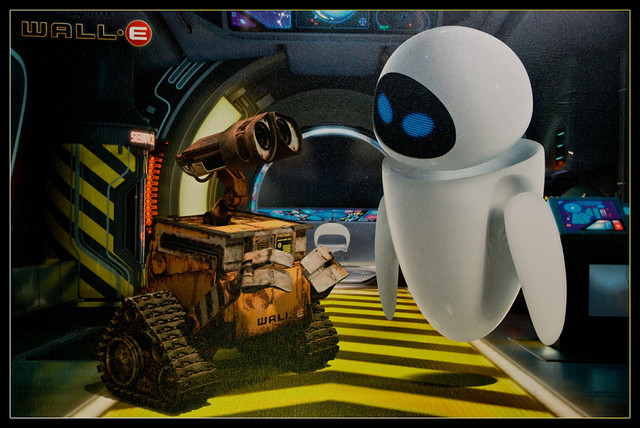
10-Wall-E and Eve in Wall-E (2008) Of all the on screen animated couples in history I have been moved most by these two robots falling in love.  This love is not about chemistry (because the characters are animated), but mostly about finding that one person who completes you.  Wall-E is a lovelorn robot who idealizes finding the perfect person from seeing the film Hello Dolly!  Wall-E helps her save the world and you can't help but feel the connection.

9-Billy Crystal (Harry Burns) and Meg Ryan (Sally Albright) in When Harry met Sally (1989) The age old question "can women and men be friends?" Crystal and Ryan have great chemistry, even when they can't stand each other at the beginning of the movie, their on screen banter is great.  As the movie progresses and they become friends you can't but see that there is more to this relationship.  Watching how important they are to each other is beautiful, and seeing that a good relationship blossoms from friendship.
photo

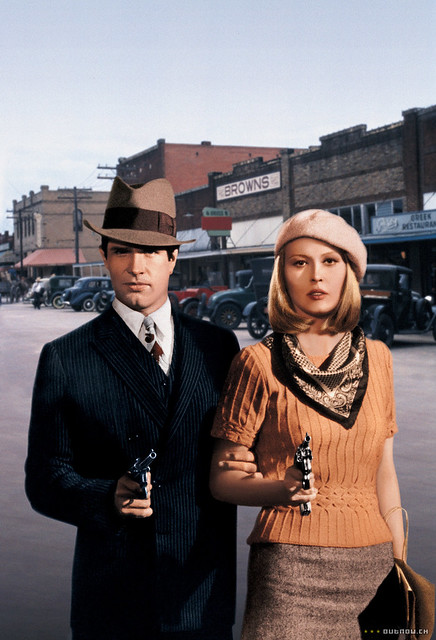
8-Warren Beatty (Clyde Barrow) and Faye Dunaway (Bonnie Parker) in Bonnie and Clyde (1967) The are in love, and they rob banks.  This romanticized tale of the famous bank robbers Bonnie and Clyde had two of sexiest movie stars of the time with passionate on screen chemistry.  Their love story and the things they do bind them an interesting way. 


7-Heath Ledger (Ennis del Mar) and Jake Gyllenhaal (Jack Twist) in Brokeback Mountain (2004)  A forbidden love as these two work together in the mountains they discover something more about themselves, and their relationship.  One cold night their share a tent and their lives are changed forever.  When they see each other for the first time to go "fishing"  their embrace and passionate kiss exude passion.  When Ennis goes to see Jack's parents and finds his shirt in the closet he realizes they had as the song from the movie sad "A love that will never grow old."

6-Elizabeth Taylor (Cleopatra) and Richard Burton (Mark Anthony) in Cleopatra (1963) Their real life romance was apparent on the screen.  This film is not the best but the connection that Taylor and Burton had on screen was unmistakable.


5-Julia Roberts (Vivien Ward) and Richard Gere (Edward Lewis) in Pretty Woman (1990) The hooker and the millionaire fall in love?  This fairytale story details Roberts going from whore to a girl worth fighting for; she never kisses, but once she starts she can't stop.  As Gere climbs up her fire escape a modern fairytale is born and anything can happen in Hollywood. 


4-Vivien Leigh (Scarlet O'Hara) and Clark Gable (Rhett Butler) in Gone with the Wind (1939)-The passion and the tension between these two is so magnetic.  Rhett was not her first choice, but often in life, love and chemistry are not easy.  Leigh and Gable's  fighting adds to heat that they have and frankly I don't give a damn if you disagree with me.


Kate Winslet and Leonardo DiCaprio Pictures & Photos3-Leonardo DiCaprio (Jack Dawson) and Kate Winslet (Rose DeWitt) in Titanic (1997)-My favorite modern day on screen couple.  DiCaprio and Winslet made it believable that they fell in love during their short time on this boat, and that they were meant to be together.  The last scene when they kiss in the staircase and everyone claps gives me butterflies in my stomach.


2-Katherine Hepburn (Amanda Bonner) and Spencer Tracey (Adam Bonner ) in Adam's Rib (1949)  This is another real life love affair that emulated great on screen chemistry.  In this film the pair are a married couple who are both lawyers and on opposing sides in a court case.  This film is funny, touching, and highlights some of the greatest on screen ever!

1-Humphrey Bogart (Rick Blaine) and Ingrid Bergman (Ilsa Lund)  in Casablanca (1942)-As time goes by I can't ever forget this memorable on screen couple.  Thir brief love affair is something unforgettable, and it bodes the question do you give eternal love for safety?  Boggie and Bergman are magical together, they play off each other so well.  This iconic film is about their relationship and this pair sold it.