Tuesday, April 3, 2012

Take me out to the Ballgame

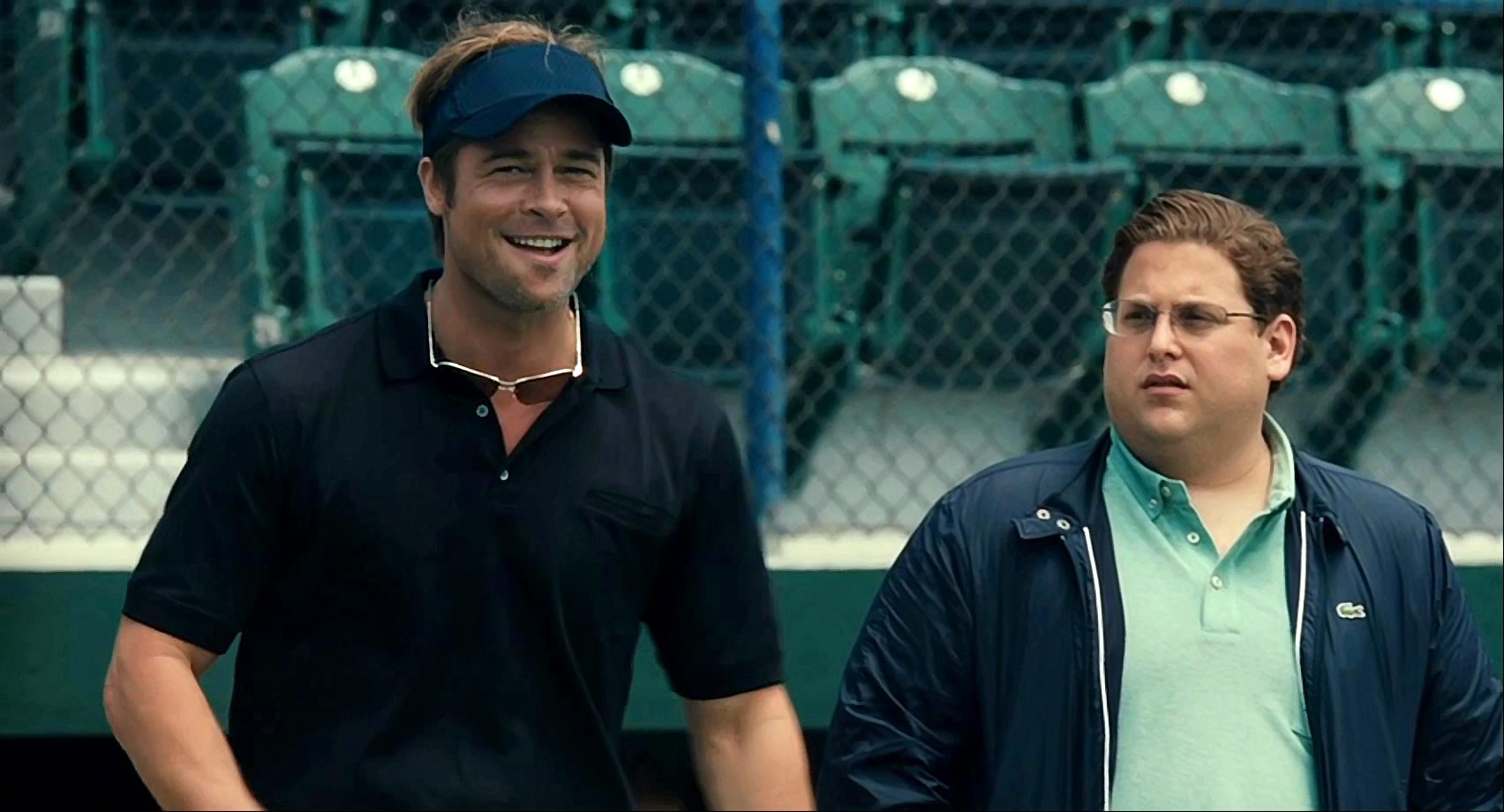
Last night I sat down to watch Moneyball, for the second time with a group of friends.  The timing is honestly perfect as baseball season starts to get under way.  Moneyball is the most recent film about baseball, even though it hits a much deeper message, and takes the message to a much deeper level.  Baseball is known as America's pastime, so it only makes sense that the greatest sports films are about knocking one out of the park.  From Pride of the Yankees (1942) to Moneyball (2011) there has been an evolution within this genre about the game, the players, cultural impact, personal impact, and the game itself.

Pride of the Yankees was the first film about baseball.  The film centers around one of the greatest players of all time and his struggle with a disease that was named after him.  The film chronicles Lou Gehrig and his career along the greats like Babe Ruth.  Gehrig was only 37 when his disease forced him to step down from being part of the most feared duo in baseball.  In Pride the speech Gary Cooper gives as Gehrig gives as he leaves the Yankees is one of the most moving speeches.


Throughout the years films have emulated the iconic value of the game and the players.  There have been films about most of the greats, The Jackie Robinson Story (1950), The Babe (1992), and 61* (2001), to name a few.  


Baseball films have not only talked about the heroes within the game, but also done a great job talking about the underdog who comes from behind to save their team, or even our hearts as they make great catches, or win a game for their team.  The first film that comes to mind that does this does not do this in a touching way, but uses comedy.  Major League is one of the funniest sports films ever made.  When 'Wild Thing' (who knew how accurate that would be for Charlie Sheen) steps up to the mound you want to cheer.  This rag tag group of misfits comes together for love of the game (and sometimes themselves), but in the end you fill uplifted. 


The underdog team or player is a trend within baseball films.  There have been so many great baseball films that use this theme to convey someone coming from nothing and creating a great team, or working hard to succeed in something they love.  Films like The Bad News Bears (1976), Sandlot, Rookie of the Year, and Sandlot (both 1993) deal with young people who overcome odds to push themselves to become better in the game.  Bears is more like Major League in that the end results may be imperfect, but these young players push themselves to come together and be a better team.  Bears represents a the more cynical style of film making within the 70s.  Rookie and Sandlot both have this optimistic things will work out in the end mentality.  They represent the hopefulness of youth in attaining their dream of being part of something bigger/something they admire.


There are of course films about adults who go up against all odds to show their love for America's past time as well.  Field of Dreams (1989) deals with a man who is told by a mysterious "If you build it they will come."  Kevin Costner plays the lead role within this film, and many think his goal to build a baseball field is a crazy dream, but the emotional heft of this film is incredibly powerful, and shows the hope that surrounds this game, and its past.


In 2002 Dennis Quaid plays an older baseball player who people think has lost all chances of being successful in the major leagues, but he works incredibly hard and pushes himself.  This film represents the spirit of baseball as something for everyone, and as Quaid's character continues to prove himself you can't help but root for the underdog.  The same can be said for Robert Redford in 1984 classic baseball film The Natural.  While these two films represent different stories the show the passion of the athlete, and drive to not only be good at their sport, but someone who people can look to and admire.


Admiration of the game, and the players is another key element to a solid film about baseball.  In 1992 Gary Marshall made one of if not the best film about female athletes who took to field while their husbands went to war.  A League of Their Own was the story of the first year for women's professional baseball.  These women worked hard to break stereotypes, and prove that they were just as good at the sport as most of the men who played the game.  This film is heart wrenching and hilarious.

Bull Durham (1988) is another baseball film that breaks the rules,and many cite it as the best baseball film of all time.  Like some of the more recent baseball films the story is about more than just baseball or the baseball player.  The story interweaves the role hilarious role sex plays in helping a minor leaguer become better at the game.  The film proves that the king of baseball movies may just have to be Kevin Costner.  Costner shines in both of his films, and reminds people the diverse spectrum this game can bring to our lives.

 Durham shows viewers more about the game off the field the way Moneyball this past year.  Moneyball is slowly becoming not only one of my favorite baseball films of all time, but one of my favorite sports films, because it is not only not just about the game, but about the spirit associated with the game.  Moneyball proves that general manager Billy Beene had an incredible drive to bring back the heart of this sport; he was a man rejected by the game as a player, and has done more than many have ever done behind the scenes.  The film and many others prove baseball is not only America's past time in the stadiums, but also in the cinema.


Monday, April 2, 2012

Who Killed Rosie Larsen?....At this Point, Who Cares

Last night I watched the premiere of AMC's television show The Killing.  The first season of the show premiered exactly a year ago on April 3rd , and had one terrific pilot.  The opening sequence of the first episode showed the young victim Rosie Larsen running for her life from her eventual killer.  The girl was found, and set a mystery in motion. (Note reading below may have some spoilers).

The Killing is based on a Danish television series entitled Forbydelsen (The Crime), and was made into a television show in the States by the same creator Veena Sud.  Sud wrote the pilot and used the talented Patty Jenkins to direct.  One year ago I was hooked, between the solid writing, directing, and performances I was on board for this mystery/thriller.  I don't have the same the feelings as much anymore.

The show cleverly uses each episode to describe a day in the lives of the characters.  Throughout each day the police investigate the murder, we saw Rosie's parents grieve, and the election for mayor unfold.  I liked the way they constructed each episode to represent a day, it helped with the pacing and made the show feel as though it were going somewhere.  The problem was that within each episode you followed a red herring, like within a procedural, and at the end of all of episode it felt as though the show led you down endless dead end streets.  The show is not meant to be a procedural, but within the context of the case I felt it lost that center.

After to the novelty of the first episode I kept tuning in to this (and may still) because of the great acting from three of its stars. Mireille Enos plays lead detective Sarah Linden, a woman who is hellbent on solving this case; she is a determined cop who often lets the job consume her.  Enos received an Emmy and Golden Globe nomination for her portrayal.  Michelle Forbes plays Rosie's mom, and she does such a fantastic job, and not only grieving for her daughter but trying to piece her own life together.  Forbes received a Best Supporting Actress Emmy nomination.  The third person is Joel Kinneman who plays Liner's partner Holden.  You never know if you Holden is a good guy, or if you can quite trust him, and Kinnemand plays this brilliantly.

While the acting has been solid since the pilot, the direction of the story has unraveled, and seemed to wander dropping little clues in a frustrating manner.  One of the major reasons this show failed at the end of season one was because of the network, AMC.As the first season was coming closer and closer to the end many people wondered, would we know who killed Rosie Larsen?  Would the show be picked up for a second season? AMC waited until the last possible minute to release they would be renewing the show, and boom season one ended with an unsatisfying result.

The beginning of season takes the red herring from the end of season one, and makes the story go in another completely different direction.  I am dizzy from all of this, and this show needs to focus on solving this case sooner than later.  If AMC brings this show back they need to be brave and do what Ryan Murphy is doing with American Horror Story (I never thought I would say those words), but they do not believe in this show enough to completely reboot.  This means solve the the case and move on, sorry Rosie Larsen, but this show is making me less interested in you.

Sunday, April 1, 2012

Gary Ross creates a Fast Paced Battleground Where Young Children are Forced to Battle to the Death the Hunger Games

The Hunger Games (3 1/2 out of 5 Stars)
Directed by Gary Ross (Seabiscuit, Pleasantville, Dave)
Written by Gary Ross, Suzanne Collins, and Billy Ray
Starring: Jennifer Lawrence, Josh Hutcherson, Liam Hemsworth, Lenny Kravitz, Elizabeth Banks, Stanley Tucci, Donald Sutherland, and Woody Harrelson


On September 14th 2008 author (and soon to be screenwriter) Suzanne Collins released her novel The Hunger Games about a society broken down into districts.  Within this society once a year each district sends two tributes, one male and one female to the Capitol where they will compete against one another to the death until one tribute is left standing.  The Games happen because once upon a time there was a District 13 that led a rebellion, which failed, and in order to remind the districts who was in charge the Capitol created the Hunger. Games for this and entertainment purposes.

The film focuses on Katniss Everdeen (Jennifer Lawrence) from District 12, the coal mining district.  Katniss has her family including her mother and her  younger sister she lovingly refers to as Prim.  Katniss is the sole provider for her family because her father was killed in an explosion in a mine shaft.  Katniss also has her best friend Gale (Liam Hemsworth).  

The film starts on the day known as the reaping in District twelve, where Effie (Elizabeth Banks) who is an elaborately and differently dressed woman is there from the Capitol to select the boy and girl who will be picked as the tributes for this district.  The film does not explain the selection process as in detail as it should, but your age increases the amount of times your name is placed within the bowl.  Prim is the girl selected from District 12, but her sister Katniss volunteers in her place.  The boy chosen for the district is Peeta Melark (Josh Hutcherson).  The two are going to be mentored by Haymitch (Woody Harrelson) the only past winner from their district.  

While the film is about the actual games, the film does not place the two tributes into the mix of the fight until about halfway through the film.  Ross does a good job with his direction there is a lot of great camera work, and even though some may think he works too quickly, I think the pacing he sets for the film allows this to be an incredibly well made movie.  Ross's work on the screenplay along with the books author Suzanne Collins allows for the film to be more faithful to the novel within a 2 1/2 hour window of time.  Even without constant action the film does a great job telling a good story.

Like with any book to film adaptation there are some changes in the film.  One of the major changes is how Katniss gets the Mockingjay pin.  I think this may have been a bigger mistake, but with Collins helping in the screenwriting I am less concerned. I wish the film did a better job exploring the tributes from the the other districts.  Viewers of the film who did not read the book may be confused about the different more prominent tributes, or the districts they represent.  I would like to have learned more about the other tributes, in fact they did mention one of the more key tributes nick named Fox Face until the end of the film.  This is a concept that is important in establishing the future concepts within the other novels.

The film and the book center around a larger social issues, the first film like the book does not get into the greater details.  Ross aptly handled social issues within the film Pleasantville, and like within the first book this film lays the foundational context for unrest.    As the viewer you see the Capitol is an evil bastion that attempts to control those outside of their world.  In the film Donald Sutherland's President Snow (who is the first film much more than in the first book) lays the foundation for the dark agenda of the Capitol.  I hope as the film series continues to explore the deeper context of the books, and the role each district plays rather than just quickly talking about them.

I also hope the book uses the solid acting to help make these films more watchable than most of the more recent book adaptations. The acting is top notch, Lawrence is always compelling, and she does a great job as Katniss; she sells every emotion.  Woody Harrelson who plays Haymitch was another standout performer, and like Katniss Haymitch is one of the great characters in this film. 

With any book to film adaptation there is always room for improvement, and there can always be some complaints, but this is a solid well made film.  Even with its flaws succeeds.  Many people will compare this film series to the Twilight saga, but there is no comparison.  Each film is its own, and I have to say this film succeeds in every place the other does not.  I was glued to my seat for the entire time, and drawn into the film, and as the credits rolled I was able to walk away feeling satisfied with the end result.

Mad Men Returns with "A Little Kiss"

I know I am behind the times on this, but I was not able to watch the first episode of Mad Men until today.   Mad Men has been off the air since October 17th 2010.  After one year and a half off the air Mad Men finally returned last week, and with a great publicity campaign that leaked little information about the shows return, I was on the edge of my seat waiting for this show to return.

Mad Men has represents a nostalgic look back culture within the 1960s.  The shows uses an advertising agency, its workers, and their familial experiences to highlight different lifestyles within this era.  The show represents an interesting look at gender, race, politics, and the influences of popular culture.  From working on the film Bye Bye Birdie with Ann Margaret to intertwining the JFK assassination into a wedding this show looks at this era with an imperfect lens.

The 60s were a turning point in American history, as many started the decade with sheer hopefulness the tides began to change.  In the post JFK assassination days things the Civil Rights Movement grew stronger, Vietnam became a reality, women started going into the workforce not just as secretaries, and  cultural norms started to evolve.  The history of this show has shown just how brilliantly this decade propelled the evolution of these characters within this show.

This season of Mad Men starts within the late 1960s and with the central character Don Draper turning 40.  The firm Sterling Cooper Draper Price is struggling financially and hoping to stay above water land clients, and make sure that they can maintain the business they built on their own.  Don and Meghan are now married, and working together which has created an interesting dynamic for the firm.  Joan has had her baby, and is struggling to balance motherhood, and missing her work as the office manager at the firm.

The episode entitled "A Little Kiss" represent an excellent use of the shows ensemble, from Pete being the one who works his ass off, as head of accounts to Roger being the office clown and mocking Don's new wife for her birthday dance.  The shows pacing allows the viewer to take less fast paced world.  The creator and main scribe Matthew Weiner has created a world based in reality.  Weiner has constructed deep characters that have grown throughout the years.  As this episode ends we see each character working through their own internal struggle in a way that will propel them toward their future at work, and within their personal lives.  As show ends the Civil Rights movement is in full swing, a joke advertisement forces the agency to interview and hire their first black receptionist, thus pushing this show further into the future.


Saturday, March 31, 2012

Broadway Revisited: Next to Normal

Tonight I went to see a local Boston production of Next to Normal at Boston Center for the Arts.  I first saw the show back in New York City on Broadway in 2009. 

I first had heard about this show from friends who had seen it and were blown away by its non traditional use of rock, which took a story different from most on Broadway.  Normal centers around a mother, Diana, who is suffering from a bipolar mental disorder, and the effects it has on her husband, daughter, and son.  There is one spoiler that I do not want to give away, but the show deals with dark issues like depression, death, suicide, and other modern day issues like psychiatry, and suburban life.

The show had its bumps in the road, the cast slightly changed, but the creative team of Brian Yorkey, who wrote the book and lyrics, and Tom Kitts who wrote the music.  These two men helped to create one of my top five favorite Broadway shows of all time.  Their show is the emotional ride, that has incredible depth and music that pierces the soul.  Kitts won two Tony awards for this show for Best Orchestrations and Best Score, while the duos second pair Yorkey won for Best Score.  The duo also won the Pulitzer Prize for Best Drama in 2010 an incredible honor, and rarely is given to a musical.

Watching the show tonight made me think about seeing the show three years ago with the fantastic original case.  The original cast included the Tony Award winning (for this role) Alice Ripley. Ripley played the central character Diana battling with bipolar disorder.  J. Robert Spencer was also Tony nominated and played Diana's husband Dan.  Spencer was brilliantly vulnerable and showed terrific range in his acting and singing.  Jennifer Damiano played Natalie their daughter.  Natalie is this angst ridden and dealing with mother's disease while struggling to battle adolescence, and the potential fear of her mother's disease effecting her.  Damiano was a relative newcomer but she also landed a Tony nomination for her role.  Aaron Tveit rounded out the family playing Gabe the son.  Tveit did a solid job in his first show, and has since done more work proving his talent and charisma on stage.  The rest of the cast was rounded out with Louis Hobson who played both of Diana's doctors, and Adam Chanler-Benet who played Natalie's love interest Henry.

Seeing the show, and hearing the beautiful music allowed me to transport myself into the emotion world when I first saw this show.  I remember connecting with the characters emotional struggles on a deeper level than any musical I had ever seen before.  Watching Diana struggle through her emotional experiences, and fight to become sane is gripping.  The same can be said for Dan's journey.  Dan often wonders if he is the one who is crazy because he sits by as his wife descends into depression, while he can do nothing.  The performance below says it all about this show, enjoy, and if you have not experience this show, you should find a way to listen to at least listen to the wonderful music.


Friday, March 30, 2012

Happy First Anniversary (Belated)

While waiting around I realized I had been writing this for one year on March 20th.  With work being, and attending a work conference like a bad husband in TV or film I forgot my own anniversary.

One year ago I wrote these words "Welcome to my new blog!  This focuses on the film industry and the role it plays it not only shaping the landscape of history, but in shaping our culture.  Many of you may think of me as a film snob or an elitest, but I enjoy well made well written films.  When I spend my money I want to know the producers, directors, cast put the time, effort and energy to make quality material. (Just wanted to put in Warning)"  

For those of you who read my blog regularly you have seen that my postings have evolved, and I do not just talk about film, but talk about television, and music.  Like with all writers the work evolves, and with one year under my belt I am sure further changes will occur.

If I were writing this blog now I would write my posts are meant to focus on popular culture, with reviews, commentary and critical analysis of race, sexual orientation within different mediums, award show results, predictions, and commentary, and honestly much more.  When I started this one year ago I did this as a result of an assignment in graduate school.  I now write for the sake of my own sanity to discuss an area of passion in my everyday life.

Where will things go next?  More about comic books/graphic novels, and books.  This is the year of presidential election, and I imagine politics will creep into some of my posts.  There will be more of the same talking about films being released in the month, writing about classic television shows, and my adventures in music exploration.

This has been an interesting year, and I have to share my appreciation and gratitude first and foremost to the people who read my posts.  Those who read this have shared how much they either enjoy or disagree with me (quite strongly), and I appreciate both.  I write not just for myself, but for people to share in a dialogue about popular culture.

I also have to thank the inspiration for the title of this, Eternal Sunshine of the Spotless Mind.  The team who put this film together from the director to the composer, put together a beautifully crafter film that creates an emotional experience in me every time that is unlike any other film.  To close my anniversary post I am going to post a quote from Alexander Pope that the film uses:

How happy is the blameless vestal's lot!
                                                 The world forgetting, by the world forgot.
Eternal sunshine of the spotless mind!
Each pray'r accepted, and each wish resign'd
Remember popular culture can have a much deeper impact than we realize.  I hope within the next year  I take things to the next level and challenge myself to make people think about the various aspects of popular culture on a deeper level.  Thank you for a great firs year!

Madonna Continues Her Evolution/Sticks with her Roots with MDNA

Madonna-MDNA (3 1/2 out of 5)


In a post divorce world Madonna's new album has much more depth, that takes her silky pop music to new levels.  Of the 16 tracks on the album 7 of them are about her divorce. 


One of her track I Fucked Up starts with an almost apologetic nature  "I fucked up, I made a mistake,Nobody does it better than myself, I'm sorry, I'm not afraid to say I wish I could take it back, But I can't,I'm so ashamed, You're in so much pain, I blamed you when things didn't go my way, If I didn't, you'd be here, If I didn't fight back, I'd have no fear,If I took another path, things would be so different, But they're not, I 'coulda just kept my big mouth closed, I 'coulda just done what I was told, Maybe I should of turned silver into gold,But in front of you I was cold."
'
While there are also moments where pain becomes anger with track like Some Girls stating that Guy Ritchie Madonna's ex should be happy with his new woman with her fake tits, and the clear message of the song is just simply you will never find a girl as good as me.


While most of the album does have an emotional heart wrenchingdetails of her divorce and her search for new love the album explores the evolution of the traditional Madonna blended with the new dance/electronica genre of  today.  As some people may scoff that Madonna may sound like Avril Lavigne in her collaboration with Nikki Minaj and M.I.A. (which is somewhat true).  I think the she also holds true to not leaving her own pop style behind.  Madonna is working with William Orbit after he has been missing in action from her work from the last 12 years.  Her work with duo Orbit "Gang Bang " which has this great fun feeling like all of her old music.  Orbit helps Madonna let out even more anger with this track attacking Ritchie's shoot em movies, using a Kill Bill style sound which is flawless.


The club tracks can often have their hallow sounds while Madonna does not just with Orbit but also with Martin Solveig on "Give Me All Your Luvin" which does allow him to use his own talents, but rather curbs his style to sounding like William Orbit.  The other problem is that the work of other people like Benny and Alle Benassi put some hallow tracks "Girls Gone Wild" while these two songs can be incredibly fun they often lose the drive and deeper meaning of the album.


Yet with some flaws Madonna has seemed to find the balance between creating something new and sticking to a style that is truly her own.  This is her best work since Confessions on a Dance Floor in 2005, and Madonna knows how to create excellent pop music.  Even her music video below shows that Madonna is rooted in her past and should never work away from what makes her a great artist.